Showing posts with label James Madison. Show all posts

Monday, June 1, 2026

What happened to our country

We were cleaning our basement when we came across some 1976 Bicentennial material that my wife's mother had carefully stowed away. Here is an example.


This 1976 calendar was given away free at Exxon stations. The promotional calendar was distributed at the beginning of the bicentennial year and must have been planned months in advance. She also preserved Founding Father playing cards that were given away at Bob's Big Boy. Lots and lots of other company-sponsored items were given away free to celebrate our country's anniversary and the Declaration of Independence. (My mother-in-law was a very nice person, but cheap. She valued free stuff.)

Google ExxonMobil for our 250th celebration. Crickets. Same for most of Corporate America. Our USA-based companies have found something else to celebrate. Something else to take pride in.


ExxonMobil got one thing right in the promo narrative: "It is a time to reflect on how culture has changed and a time to ambitiously seek where we would like culture to go."

When did patriotism go out of fashion? When did patriotism become scorned? When did we forget, or never learn, the significance of our Founding and the Declaration of Independence? 

Not only when, but who decided? Who stole our American heritage?

The best way to celebrate the 250th Anniversary of the United States of America is to replace who with we ... We the People.


Repeating the quote at the top of this page.

“The infant periods of most nations are buried in silence, or veiled in fable, and perhaps the world has lost little it should regret. But the origins of the American Republic contain lessons of which posterity ought not to be deprived.” —James Madison


American Exceptionalism Series

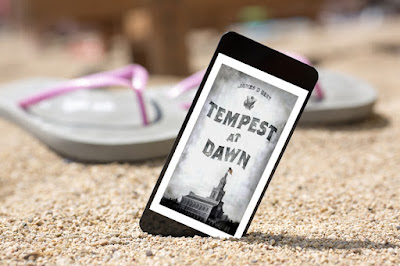
Tempest at Dawn

Maelstrom, A Civil War Novel

Monday, November 11, 2024

Grok's take on Tempest at Dawn


Grok's Self-Portrait

I wasn't a strong proponent of artificial intelligence until I asked Grok about my own work. Now, I'm a fan of AI. Perhaps flattery can get you everywhere.

Is Tempest at Dawn a good book?

Grok's answer:

Yes, Tempest at Dawn by James D. Best is generally considered a good book, particularly for those interested in American history or historical fiction. Here's why:

Historical Insight: The novel provides a detailed look into the events surrounding the Constitutional Convention of 1787, offering readers a narrative that feels both educational and engaging. It's praised for bringing to life the complexities of the political negotiations and personal dynamics among the Founding Fathers.
Character Portrayal: Reviews suggest that Best does an excellent job of humanizing historical figures like James Madison, George Washington, and Benjamin Franklin. This portrayal adds depth to characters often seen as one-dimensional in history books, making the narrative more relatable and engaging.
Narrative Style: While not filled with the typical elements of suspense or action like other genres, the book maintains tension through its depiction of debates and compromises. Critics and readers have noted that the story "matures" as it progresses, with the writing quality improving, which suggests an evolving narrative depth.
Educational Value: It's recommended for students or anyone looking to better understand the process behind the framing of the U.S. Constitution. The novel's depiction of the convention's debates offers a human touch to what can otherwise be dry academic material.
Critical Reception: The book has been featured on lists like the Glenn Beck Reading List, indicating its recognition in certain circles for its historical accuracy and storytelling. Reviews from sources like "What Would The Founders Think?" and Goodreads users highlight its ability to flesh out the characters and make the historical event vivid.
However, some reviewers have expressed a desire for more detail on the ratification process or the role of the Federalist Papers, suggesting that while it covers the Convention well, it might not delve as deeply into these aspects as some might hope.
In summary, "Tempest at Dawn" is well-regarded for its detailed, character-driven portrayal of a pivotal moment in American history, making it a recommended read for enthusiasts of historical fiction or those looking to gain insight into the creation of the U.S. Constitution.
The real story of our nation's founding.


Tuesday, March 10, 2020

Guest essayist at Constituting America: U.S. Constitution Sent to the States for Ratification


Constituting America


The Founding of this great nation was unique. Until 1776, with a few brief exceptions, world history was about rulers and empires. The American experiment shook the world. Not only did we break away from the biggest and most powerful empire in history, we took the musings of the brightest thinkers of the Enlightenment and implemented them. Our Founding was simultaneously an armed rebellion against tyranny, and a revolution of ideas—ideas that changed the world.
That is why we still care about America’s founding and the Framers of our Constitution.

Monday, September 16, 2019

In celebration of Constitution Day, here's a description of the signing ceremony from Tempest at Dawn


On September 17, 1787, the delegates to the Constitutional Convention signed the engrossed document that began with the three famous words that define the true source of all government power.

From Tempest at Dawn, here's an abridged description of the ceremony.


Madison sat in his customary place with folded hands resting on the table. He didn’t intend to take notes today. In fact, he didn’t intend to take any more notes on any day. This signing ceremony would be the final act of the convention.

Madison noticed that his ink-stained hands looked prayerful. He thought this fitting because a reverential spirit suffused the assembly. The chamber remained hushed as the secretary read the engrossed Constitution in its entirety. At the conclusion, Franklin rose with a speech in his hand.

“Mr. President, most men believe they possess all truth and that whoever differs from them is in error. The older I grow, the more I doubt my own judgment and the more I pay attention to the judgment of others.

“When you assemble a group of men to take advantage of their collective wisdom, you inevitably bring together all their prejudices, passions, and selfish views. From such an assembly, can one expect perfection? It astonishes me that this system approaches so near perfection.

Franklin dropped his papers to his side and spoke in a commanding voice. “I move the Constitution be signed.”

King interrupted the initiation of the signing ceremony. “I suggest that the journals of the convention be destroyed or deposited in the custody of the president. If it becomes public, those who wish to prevent the adoption of the Constitution will put it to bad use.”

 “I prefer the second expedient.” Wilson looked directly at Gerry. “Some may make false representations of our proceedings, and we’ll need evidence to contradict them.”

The last comments confirmed Madison’s suspicion that the fight for ratification would be divisive and mean-spirited.

The motion passed to deposit the journals into the hands of Washington.

Finally, all other business completed, Washington formally called on the delegates to sign the Constitution. The secretary had arranged the Syng inkstand that had been used to sign the Declaration of Independence on a green baize-covered table. Washington walked around the table and signed first. He then called the states from north to south. The delegates remained silent and reverential as they approached the low dais to apply their signatures.

When Virginia was called, Madison felt a tightening in his stomach. This Constitution would permanently bind his beloved country. When he picked up the pen, he looked at Washington, who stood respectfully to the side, instead of behind the table. The precedents set by this man would seal these words. Madison grabbed the pen, dipped it in the inkwell, and signed with confidence. When he looked up, Washington gave him a nod that made Madison think he had read his mind.


Despite his illness, Franklin had remained standing after he signed, shaking hands with delegates and whispering an occasional aside. While the last members were signing, tears glistened in Franklin’s eyes. With an obvious struggle to control his emotions, he began to speak in a stronger than normal voice.

“Gentlemen, have you observed the half sun painted on the back the president’s chair? Artists find it difficult to distinguish a rising from a setting sun. In these many months, I have been unable to tell which it was. Now, I’m happy to exclaim that it is a rising, not a setting sun.”

Once the last signature was in place, no one wanted to spend another moment in this room that had dominated their lives for so many months. Besides, John Dickinson had left a banknote for a celebratory dinner at the City Tavern.

Because of the momentous day, Franklin intended to walk out of the State House. Madison grabbed one elbow, and Wilson took the opposite side to help the old man out of the chamber. Madison hoped he could protect Franklin from being jostled by the bubbling delegates, but Washington took a point position in front of their little group, and the crowd parted like the Red Sea.

“I want to thank you gentlemen for helping an enfeebled and diminished old man,” Franklin said.

“I witnessed your diminished capacity these many months,” Madison said. He became puzzled when this somehow evoked a hearty chuckle from Franklin.

The doctor glanced between Madison and Wilson. “I’m usually assisted by the inmates of Walnut Street Prison. It occurs to me that you men have been prisoners in this chamber.” Franklin chuckled again. “With the power vested in me by the State of Pennsylvania, I pardon and set you free.”

At that precise moment, with theatrics that seemed natural to Washington, the sentries threw open the door to the State House, and Madison was assaulted by bright sunlight and a deafening roar. Hundreds of people cheered, clapped, and whistled at the sight of Gen. George Washington framed by the great white door.

The threesome stopped a respectful distance behind Washington. This crowd was not going to part so easily. In fact, the sentries had skipped down the three steps and joined arms to hold back the surge of people.

“Our rambunctious session on Saturday told our fair citizens that we had concluded our business,” Franklin observed.

“Are you riding with the general?” Madison asked.

“Relax, boys. The general will know the exact moment to step off the stoop.”

True to Franklin’s prediction, Washington gauged the crowd’s mood perfectly, and when he stepped down, they gave the men a narrow path to Washington’s beautiful new carriage.

As they followed in the general’s footsteps, the people continued to cheer and applaud. A woman leaned her head past Madison to yell, “Dr. Franklin, what is it to be? A republic or a monarchy?”

The doctor hesitated in his step and looked over the throng of anxious people. His answer came in a firm, loud voice.

“A republic—if you can keep it.”

https://amzn.to/2QekkkM
The real story of our nation's founding.

Saturday, August 31, 2019

Great Labor Day Read

https://amzn.to/2zGm1wg

The real story of our nations founding


"The best novel EVER on the U.S.Constitution."--Larry Schweikart, author A Patriot's History of the United States and over a dozen other history books

"I find hope and confidence in the wonderfully written Tempest At Dawn, by James D. Best" Allen Ball, Beaufort Observer

"The novel captures the real drama that ensued behind closed doors as they hammered out what is now the oldest living constitution and the foundation of the nation. Read it for its historical value. Read it for its dramatic value. But read it!"--Alan Caruba, Bookviews

"Thanks to James Best's masterpiece, Tempest at Dawn, I felt like the 56th delegate at the Constitutional Convention. Using vivid narrative and expressive dialogue, Tempest at Dawn presents all the major issues the Founding Fathers struggled with."--Michael E.Newton, author of Alexander Hamilton and other history books.

"This book was absolutely fabulous. When you read, it makes you feel like you are the 56th delegate. If you want a terrific historical fiction book, I recommend you start with this one." Selbrede 40Book Challenge

"The book brings our founders to life with great writing, historic accuracy and amazing wit."--On Transmigration

Friday, June 21, 2019

Why did I Write Tempest at Dawn?


I recently received a query about writing Tempest at Dawn. Here’s my answer.

The United States Constitution is one of our country’s two most revered documents. It’s one thing to write a history book about the Constitutional Convention, but a novelization could be seen as trespassing on sacred ground. When I started Tempest at Dawn, I knew the gravity of the project, but I had no idea how much work it would entail. It was twelve years between the first word and publication.

How did I get myself into this predicament? When I left corporate America to become a consultant, I found myself traveling a lot. My longest engagement was in Boston. I grew up in Southern California, where anything over fifty years old was ripped down to build something brand sparkling new. My hotel room in Boston overlooked Faneuil Hall, which had been an active meeting place since 1742. All of a sudden I was surrounded by history. I went to a bookstore looking for nonfiction about Boston, but instead bought Christopher Collier’s Decision in Philadelphia. I found the book’s description of the Constitutional Convention fascinating and ended up buying book after book on the subject. I had never known how much drama hid behind the dry narratives I had received in school. The real story was raucous, thrilling, perilous, and filled with colossal characters.

Breathtaking drama, great characters, a happy outcome, how could it go wrong. It didn’t go wrong, it went long. In the end, I believe I read every history book ever published on the convention. I wanted to treat the framers honestly, so I read at least three biographies of each of the major players. I studied Madison’s convention notes (over 230,000 words) and made sure everything I presented inside the Independence Hall was true to his notes. A good historical novel must present the period accurately, so I read dozens of books on how people lived in the late eighteenth century. Then I studied events that occurred during the convention, but were not directly associated with the proceedings. These included Washington having a carriage built, John Fitch demonstrating his steamship, horse races, Charles Peale painting a portrait of Washington, balls, and other events that I used to add variety between the deliberations.

(A special thanks to Clive Cussler, who helped with the research on Fitch's steamship demonstration in Philadelphia.)

Tempest at Dawn is tightly structured. The point of view alternates each chapter between James Madison and Roger Sherman. This allowed me to present the perspectives and biases of the two opposing forces within the convention. I had to build elaborate timelines so I could know well in advance whose point of view I would be using when something happened.

I was a stickler for accuracy. I bent rules a little to present a better story, but I wanted to know when I diverged from historical fact. This even came to the lodging. I tried to put each character in the home, inn, or boarding house where they actually stayed. Roger Sherman gave me a problem. No matter how much I looked, I couldn’t find where he stayed. I knew he wasn’t rich, so I guessed he would stay at a boarding house. Finally, I picked my wife’s maiden name and plopped him at Mrs. Marshall’s boarding house.

I made several research trips to Philadelphia. On one trip, my wife found an illustrated map of Philadelphia in 1787. It had been created for the bicentennial. It was perfect. I bought two. When we returned to our hotel, I went over the map in detail from left to right, block by block until I got to the lower right hand corner. There it showed a building with the caption, “Mrs. Marshall’s Boarding House, where Roger Sherman stayed.” I was dumbfounded … and encouraged. I took it as an omen that this book was something I was supposed to write.

Getting an agent for the book was ridiculously easy. Of course, I didn’t know that at the time. While he shopped the book, I wrote a Western. After all the constraints of Tempest at Dawn, I wanted to let my imagination fly. Unexpectedly, The Shopkeeper, A Steve Dancy Tale sold very well and became a highly successful series. On the disappointing side, Tempest at Dawn did not sell to a publishing house. So away it went in a drawer while I wrote westerns and contemporary thrillers.

Around 2009, I noticed increasing interest in the Constitution. I dug my book out of a figurative drawer (actually a file folder on my computer) and reread it. Oh, oh. First, it was way too long—well over 200,000 words. There were too many characters for a reader to remember. My penchant for accuracy caused me to use speaking patterns and language of the day. In fact, I had used direct quotes whenever possible. Except the quotes came from written records. Until email and texting, people wrote more formally than they spoke. I did a major rewrite. I modernized the language leaving only hints of the eighteenth century. I cut ruthlessly. I combined characters. Although I put the debates in a logical sequence, I didn’t alter the arguments or events inside the chamber. The book remains true to Madison’s notes.

I believe the best thing to happen for Tempest at Dawn was that by the time I did my rewrite, I had learned the craft of storytelling with my other books. (And from reading countless books on the art of novel writing.) The distance of several years also lent creative perspective. After I completed the new draft, the book reads like a novel … yet still remains truthful, even if not always precisely accurate. (There is an author note in the back that identifies the deviations from historical accuracy.)

Tempest at Dawn has been well received by professional critics and readers, and without a doubt, my favorite book. Download a sample onto your Kindle or order the paperback. I'm sure you'll be surprised and delighted by the story of our nation's founding.


Wednesday, November 7, 2018

Franklin's Hidden Role at the Constitutional Convention


Ran across this article at Franklin on Freedom.

Emotions ran high at the Constitutional Convention and the delegate who sooth tempers was usually Ben Franklin. He often did this with a humorous quip, but once filibustered a nonsensical proposition until tempers eventually abated.

Franklin did more. He also teamed with Washington for behind the scene negotiations to keep the convention from collapsing. Reading Madison's notes, it appears arguments often escalated from about mid-week to reach a crescendo on Fridays. Many sessions were recess for the weekend with acrimony high, but on Monday, with little discussion, a compromise or procedural change would resolve or delay the issue. Obviously something had been negotiated outside the chamber. Most likely, the deal would have been struck under the mulberry tree in Franklin's yard.

Benjamin Franklin was one of our greatest Founders and this article is a fun read about an interesting historical character.


Thursday, February 15, 2018

Gouverneur Morris has some advice for modern Americans


Gouverneur Morris


Most Americans don't recognize the name, Gouverneur Morris. They should. Morris is often called the Penman of the Constitution. He took a jumbled mess from the Committee of Detail and crafted the eloquent Constitution we know today. As a preeminent Founder and Framer, he did more than wordsmith the Construction. Among other things, he spoke at the Constitutional Convention more than any other delegate (173 times).

He had a lot to say, and most of it remains relevant today.

Here is a snippet from James Madison’s convention notes dated Thursday, August 9, 1787:
Mr. GOVr. MORRIS. The lesson we are taught is that we should be governed as much by our reason, and as little by our feelings as possible. What is the language of Reason on this subject? That we should not be polite at the expence of prudence … as every Society from a great nation down to a club had the right of declaring the conditions on which new members should be admitted, there could be no room for complaint. As to those philosophical gentlemen, those Citizens of the World as they call themselves, He owned he did not wish to see any of them in our public Councils. He would not trust them. The men who can shake off their attachments to their own Country can never love any other. These attachments are the wholesome prejudices which uphold all Governments …”
In a few words, Morris cautioned against being governed by feelings, spoke against political correctness, agued that a nation had the right to determine who became citizens, and explained why he distrusted “Citizens of the World.”


Wednesday, September 23, 2015

I Owe a Great Debt to One of The Founding Fathers


For Constitution Day, Steve Bartin wrote an American Thinker article about Roger Sherman, my favorite Founding Father. Sherman was a powerful influence on our founding and his progeny have been exceptionally influential in our nation’s history. I’m biased, course. In writing Tempest at Dawn, I wanted to present a personal perspective on the major conflicts at the Constitutional Convention. I stumbled around with a few different approaches until I decided to alternate point of view between James Madison and Roger Sherman. Each chapter would switch between these two characters to give the reader a personal as well as fact-based perspective. It worked far better than I expected.

Roger Sherman and James Madison provide a great contrast. Sherman was one of the few who could look the tall George Washington straight in the eye, while a wag described Madison as smaller than a used piece of soap. Sherman was the second oldest delegate and Madison among the youngest. Sherman was an abolitionist, while Madison owned over one hundred slaves. Sherman was taciturn, while Madison was talkative. (Sherman once dedicated a bridge by stomping on it, remarked that it appeared well built, and then walked away.)

constitutional convention Constitution
Roger Sherman and James Madison


Sunday, August 23, 2015

Is the US Constitution Viable in the 21st Century?

U.S. Constitution

Today, many people question the viability of our Constitution. People ask if 18th century men could anticipate the complex issues of the 21st Century. In other words, can something written over two hundred years ago direct a government in our modern world? The short answer is yes, but let me explain.

When James Madison brought the Virginia Plan to Philadelphia, it was not a list of laws, but a system of government. A system that forthrightly recognized the weaknesses of man, and delineated a set of checks and balances to distribute power; not just between the three branches of government, but also between the federal government and the states.

Although the delegates debated endlessly over the elements of the design, and made major revisions to Madison's plan, they always kept the debates focused on limiting centers of powers. They were serious men designing a system of government for the ages to protect liberty for themselves and their posterity. Although not a common phrase at the time, every one of the fifty-five men at the Federal Convention would agree with the maxim that power corrupts, and absolute power corrupts absolutely.


Thursday, July 2, 2015

Would Divided Government Have Surprised the Founders?


Recent events in Washington make you wonder if anyone can get along inside the Beltway. It’s not just Democrats versus Republicans—now Democrats war with Democrats and Republicans war with Republicans. And all of them seem at odds with those of us in the hinterlands. Washington is getting like the Middle East without the beheadings.

Are the Founders’ at fault for government dysfunction? Garrett Epps thinks so. In an illogical piece in The Atlantic, Epps claims the Founders never anticipated a divided government. He wrote:

I’m trying to illustrate a dangerous weakness of our system, one that the Framers clearly did not foresee. Many of them believed there would not be political parties in the new system. Others no doubt thought that the government they had designed would consist of a Congress that met for a month or so every December and a president who would supervise a slumbering bureaucracy the rest of the year. Some of them assumed the president would be a passive figure, administering directions from Congress; others imagined a chief executive with some of the majesty of the king of England. I don’t think any of them anticipated that the two branches would ever clash over which represented "the will of the voters."

Epps teaches constitutional law at the University of Baltimore, but it seems he never got beyond grade school American history. (Actually, he probably knows better but hopes the rest of us have a cherry tree understanding of American history.)

First of all, none of the Founders owned a pair of rose colored glasses. These were hard core realists. Their entire design is based on placing guardrails around partisan combatants and tempering human frailty. Claiming the Founders never anticipated divided government is ignorant or disingenuous.

Historians estimate that about one third of the colonists supported a break with England, one third opposed it, and the remaining third kept their head down to avoid musket balls.  That’s pretty partisan. Jolly old Ben Franklin even became estranged from his son because they found themselves on opposite sides of the cause. Estranged is probably too light of a word since Franklin stopped G. Washington from setting his son free in a prisoner swap. Franklin and his son never forgave or forgot. Delegates to the Constitutional Convention knew ratification would be a ferocious battle, and before the convention was even over, took several actions to tilt the debate in their favor. And these men never anticipated partisanship and a divided government?

Wednesday, July 9, 2014

Author Interview: From Inception to Current Events

I ran across this Jumping in Pools interview from 2010, and it still reflects some good points about the creation of Tempest at Dawn and its relationship to current events. Here's a snippet:
"All of my writing had been highly technical, but storytelling has always fascinated me. Although I now write fiction, I had a bumpy start. I had to read piles of books on the art of fiction, hire a writing coach, and attend numerous workshops. Then I blundered around until I started to get the hang of it. It took years for me to shed the baggage that I had brought from the technical, non-fiction world. The main thing I had to learn was how to relay history and facts without interrupting the flow of the story. Much tougher than I expected."


United States Constitution
The real story of our nations founding.

Wednesday, April 16, 2014

The Three Clauses That Have Caused Much Mischief

The Founders wanted to bequeath to posterity a straightforward government that inhibited the abuse of power. Their written words remain clear. Certain politicians and judges have skewed their meaning to do what they want, but most of the harm can be attributed to three clauses:
1.         The necessary and proper clause,
2.         The commerce clause, 
3.         And the general welfare clause.

It is nonsensical to assert that the Founders meant for any of these clauses to license general national authority. 


Friday, March 28, 2014

John Adams, Philosopher Rebel

John Adams was the leading expert on government in the colonies … at least until James Madison stepped to the forefront. Harvard educated, Adams was a champion of the Founding Principles, a firm proponent of Enlightenment teachings, and a constitutional scholar. Granted, he could be argumentative and self-righteous, but he was also a pious man of honor and character.

Tempest at dawn

Sunday, March 16, 2014

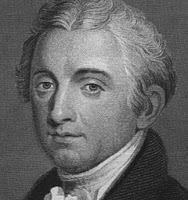
Happy Birthday, Mr. Madison

March 16, 2014 marks the 263rd birthday of James Madison. 

In his later years, James Madison protested being referred to as the Father of the Constitution. He said the document was not “the off-spring of a single brain.” Our Constitution was actually the off-spring of fifty-five brains, although none were as potent as Madison’s. James Madison was arguably the most important Framer—before, during, and after the Constitutional Convention of 1787.

political science
James Madison
Before the Constitutional Convention

In 1786, the country was at peace, but struggling. Congress called for a convention at Annapolis to offer amendments to the Articles of Confederation, but the meeting never convened due to the lack of a quorum. James Madison and Alexander Hamilton made a pact to promote another convention for the following year in Philadelphia.


Sunday, February 23, 2014

The Anti-Constitution Mercenaries


In the past, I blogged at What Would The Founders Think? One of my articles was titled, “The Founders Fear.” The article asserted that the Founders architected a limited government because they feared unrestrained power. This was written way back in 2011, but I received a scolding from a troll last week. Reeve wrote: 

Sunday, February 2, 2014

Can Tempest at Dawn be taken seriously?

Tempest at Dawn is a novelization of the Constitutional Convention. As a novel, it is not bound by the rigorous constraints of a nonfiction history book, but it does not deviate from the historical record except for modernizating language, re-sequencing of debates for logical presentation, and attributing a few speeches to a different delegate because that person was already established as a character. It’s confusing to tell a story with more than sixty characters, so I had to choose a representative sample and occasionally attribute to them the words or actions of others.

Historical Fiction
The real story of our nation's founding.
James Madison’s comprehensive convention notes provided a solid framework for what happened inside the locked doors of the Pennsylvania State House. The events outside the State House occurred, but literary license was used because there were very few recorded details about them. For example, Franklin’s dinner, the John Fitch Steam Boat demonstration, horse races, and George Washington having a carriage built were all outside activities during the convention.  The Fourth of July celebration happened pretty much as portrayed, and delegates did witness a two story house being moved down the street. 


Other than speeches, conversations were speculative, but based to a large degree on what must have been discussed in private meetings to shift the votes and opinions expressed in the proceedings.

Sunday, January 19, 2014

Time Magazine: “Does It Still Matter?”

“Let us not make it a blank paper by construction. ... If it is, then we have no Constitution.” Thomas Jefferson
“Can it be of less consequence that the meaning of a Constitution should be fixed and known, than a meaning of a law should be so?” James Madison


The cover of the 10th Annual Time Magazine History Issue from a couple years ago shows the Constitution being shredded under the title, “Does it still matter?”

Richard Stengel, Time’s managing Editor, opens his essay with these words, “Here are a few things the framers did not know about. World War II. DNA. Sexting. Airplanes. The atom. Television. Medicare. Collateralized debt obligations. The germ theory of disease. Miniskirts. The internal combustion engine. Computers. Antibiotics. Lady Gaga."


Thursday, January 9, 2014

The Heritage Guide to the Constitution

A reference Book for Every American Home

Many Americans have taken to carrying a copy of the Constitution. No one will want to lug around The Heritage Guide to the Constitution, but the book is an indispensable reference companion. The first words in the book read, “The Heritage Guide to the Constitution is intended to provide a brief and accurate explanation of each clause of the Constitution as envisioned by the Framers and as applied in contemporary law.” It achieves this goal admirably.

As you would expect from the Heritage Foundation, this is an Originalist reference book, and the editors have done an excellent job of explaining the Constitution as envisioned by the Framers. But it also explains the Constitution as applied in contemporary law, which means the book describes how courts have interpreted the Constitution.


Wednesday, December 18, 2013

The Founders on Limited Government

Governments govern … which means they exercise power.

James Madison wrote, “The essence of Government is power; and power, lodged as it must be in human hands, will ever be liable to abuse.” 

Fear of an overly powerful government was a basic principle of the Founders. They firmly believed liberty could not exist with unrestrained government.  Many modern Americans find this belief odd or quaint. After all, a powerful government is needed to right all the wrongs in this world. And there are so many wrongs. Certainly benevolent rule is preferable to wrongs perpetuated on innocent people. Except all-powerful government has been the norm throughout history … and people have been duped, subjugated, robbed, imprisoned, and even murdered by governments.

The Founders weren’t paranoid; they came by their fear of power through personal experience and their study of history. They believed governments oppress and liberty depended on decentralized authority and potent restraints on the abuse of power.


To prevent the government from becoming overly powerful, the Founders used a number of techniques:
  • Enumerated powers
  • Three branches of government with power balanced between them
  • Each branch was given checks on the exercise of power by the other branches
  • A federal system with the states acting as a check on the national system
  • Different terms of office for elected and appointed officials
  • Limited taxing authority (Superseded by the 16th Amendment)
  • A list of things the government could not do ... commonly called the Bill of Rights