Showing posts with label framers. Show all posts

Wednesday, December 2, 2020


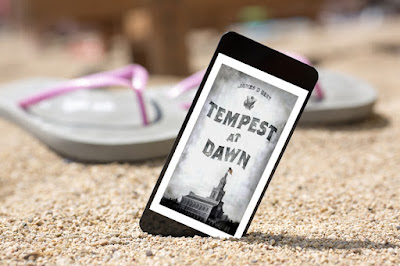
Jennifer N. Fenwick has written an excellent blogpost titled Government of the People, by the People, for the people – What That Truly Means. In the process of deftly describing our heritage, she gives a nice shout-out to Tempest at Dawn

Many of the compromises, though hard for us, some two-hundred years on, to understand, were born from necessity. For a compelling inside look at that Summer in 1787, I encourage you to read Tempest at Dawn, by James D. Best. Based on the diaries of Madison and other delegates, along with correspondence and other written records of the day, Best’s book is like having a front-row seat to the Convention and the writing of our Constitution.

Fenwick is the author of several books including, In the Eye of the Storm: Stories of Survival and Hope from the Florida Panhandle.


Saturday, August 31, 2019

Great Labor Day Read

https://amzn.to/2zGm1wg

The real story of our nations founding


"The best novel EVER on the U.S.Constitution."--Larry Schweikart, author A Patriot's History of the United States and over a dozen other history books

"I find hope and confidence in the wonderfully written Tempest At Dawn, by James D. Best" Allen Ball, Beaufort Observer

"The novel captures the real drama that ensued behind closed doors as they hammered out what is now the oldest living constitution and the foundation of the nation. Read it for its historical value. Read it for its dramatic value. But read it!"--Alan Caruba, Bookviews

"Thanks to James Best's masterpiece, Tempest at Dawn, I felt like the 56th delegate at the Constitutional Convention. Using vivid narrative and expressive dialogue, Tempest at Dawn presents all the major issues the Founding Fathers struggled with."--Michael E.Newton, author of Alexander Hamilton and other history books.

"This book was absolutely fabulous. When you read, it makes you feel like you are the 56th delegate. If you want a terrific historical fiction book, I recommend you start with this one." Selbrede 40Book Challenge

"The book brings our founders to life with great writing, historic accuracy and amazing wit."--On Transmigration

Sunday, August 23, 2015

Is the US Constitution Viable in the 21st Century?

U.S. Constitution

Today, many people question the viability of our Constitution. People ask if 18th century men could anticipate the complex issues of the 21st Century. In other words, can something written over two hundred years ago direct a government in our modern world? The short answer is yes, but let me explain.

When James Madison brought the Virginia Plan to Philadelphia, it was not a list of laws, but a system of government. A system that forthrightly recognized the weaknesses of man, and delineated a set of checks and balances to distribute power; not just between the three branches of government, but also between the federal government and the states.

Although the delegates debated endlessly over the elements of the design, and made major revisions to Madison's plan, they always kept the debates focused on limiting centers of powers. They were serious men designing a system of government for the ages to protect liberty for themselves and their posterity. Although not a common phrase at the time, every one of the fifty-five men at the Federal Convention would agree with the maxim that power corrupts, and absolute power corrupts absolutely.


Thursday, March 6, 2014

Voting rights in the Constitution

Some accuse Constitutional Conservatives of wanting to return our country to slavery and restricted voting rights. This is deflection. Constitutional conservatives want the government to adhere to the Constitution, including amendments, so this argument is specious. Amendments have solidified American positions on these issues and these amendments are part of the supreme law of the land.

Many also harbor misunderstandings about how the main body of the Constitution addressed slavery and voting rights. Despite obvious shortcomings, by 1775, the American colonies were the most democratic places on earth. In Britain, voting rights were far more limited than in the colonies. Less than ten percent of men could vote in Britain, and those who could vote were selected by local nobility. A far larger segment of men voted in the colonies and the requirements were set by law, not officials. Voting rights traced back to the earliest history of the colonies. Within days of landing in Jamestown, for instance, the first colonists elected an executive officer. Only six men were allowed to vote in this embryonic colony, but from that moment forward, colonists expanded the right to vote to broader segments of the population.


Tuesday, February 4, 2014

A Time of Civil Debate

A rowdy debate consumed nearly everyone in the United States between the Constitutional Convention and ratification. The population of the country was about four million and possibly a quarter of that number were activists during the Revolution and founding. What did people think about a constitution written in secret? We don’t have to guess. A prodigious number of articles and pamphlets were published by proponents and opponents.

Tempest at Dawn


Sunday, February 2, 2014

Can Tempest at Dawn be taken seriously?

Tempest at Dawn is a novelization of the Constitutional Convention. As a novel, it is not bound by the rigorous constraints of a nonfiction history book, but it does not deviate from the historical record except for modernizating language, re-sequencing of debates for logical presentation, and attributing a few speeches to a different delegate because that person was already established as a character. It’s confusing to tell a story with more than sixty characters, so I had to choose a representative sample and occasionally attribute to them the words or actions of others.

Historical Fiction
The real story of our nation's founding.
James Madison’s comprehensive convention notes provided a solid framework for what happened inside the locked doors of the Pennsylvania State House. The events outside the State House occurred, but literary license was used because there were very few recorded details about them. For example, Franklin’s dinner, the John Fitch Steam Boat demonstration, horse races, and George Washington having a carriage built were all outside activities during the convention.  The Fourth of July celebration happened pretty much as portrayed, and delegates did witness a two story house being moved down the street. 


Other than speeches, conversations were speculative, but based to a large degree on what must have been discussed in private meetings to shift the votes and opinions expressed in the proceedings.

Sunday, January 19, 2014

Time Magazine: “Does It Still Matter?”

“Let us not make it a blank paper by construction. ... If it is, then we have no Constitution.” Thomas Jefferson
“Can it be of less consequence that the meaning of a Constitution should be fixed and known, than a meaning of a law should be so?” James Madison


The cover of the 10th Annual Time Magazine History Issue from a couple years ago shows the Constitution being shredded under the title, “Does it still matter?”

Richard Stengel, Time’s managing Editor, opens his essay with these words, “Here are a few things the framers did not know about. World War II. DNA. Sexting. Airplanes. The atom. Television. Medicare. Collateralized debt obligations. The germ theory of disease. Miniskirts. The internal combustion engine. Computers. Antibiotics. Lady Gaga."


Monday, January 13, 2014

Commentary: Is the Constitution’s purpose to advance life, liberty, and the pursuit of happiness?

Conor Friedersdorf published an article that reflects the thinking that has gotten us so far away from constitutional government.

The title of the article is illustrative: “Preserving Liberty Is More Important Than Making a Fetish of the Constitution: Though important, the document isn't an end in itself—advancing life, liberty, and the pursuit of happiness is the end.” The title could have as easily read, “The Constitution should never stand in the way of lofty goals.”

James Madison
Conor Friedersdorf

(I trust my liberty to the guy on the right.)

As a writer, I’m familiar with the effect of selecting emotion-laden words. For example, the article would have been different if titled, “Preserving Liberty Is More Important than Adhering to the Constitution.” The change from fetish to adhere makes the argument clear and allows the opposing side a measure of respect. Now, readers would dig into the article to find out whether adherence to the Constitution is dangerous to liberty.

(By the way, at the risk of being accused of “making a fetish of the Constitution,” it annoys me when someone uses a quote from the Declaration of Independence to make an argument about the Constitution.)


Thursday, January 9, 2014

The Heritage Guide to the Constitution

A reference Book for Every American Home

Many Americans have taken to carrying a copy of the Constitution. No one will want to lug around The Heritage Guide to the Constitution, but the book is an indispensable reference companion. The first words in the book read, “The Heritage Guide to the Constitution is intended to provide a brief and accurate explanation of each clause of the Constitution as envisioned by the Framers and as applied in contemporary law.” It achieves this goal admirably.

As you would expect from the Heritage Foundation, this is an Originalist reference book, and the editors have done an excellent job of explaining the Constitution as envisioned by the Framers. But it also explains the Constitution as applied in contemporary law, which means the book describes how courts have interpreted the Constitution.


Wednesday, December 18, 2013

The Founders on Limited Government

Governments govern … which means they exercise power.

James Madison wrote, “The essence of Government is power; and power, lodged as it must be in human hands, will ever be liable to abuse.” 

Fear of an overly powerful government was a basic principle of the Founders. They firmly believed liberty could not exist with unrestrained government.  Many modern Americans find this belief odd or quaint. After all, a powerful government is needed to right all the wrongs in this world. And there are so many wrongs. Certainly benevolent rule is preferable to wrongs perpetuated on innocent people. Except all-powerful government has been the norm throughout history … and people have been duped, subjugated, robbed, imprisoned, and even murdered by governments.

The Founders weren’t paranoid; they came by their fear of power through personal experience and their study of history. They believed governments oppress and liberty depended on decentralized authority and potent restraints on the abuse of power.


To prevent the government from becoming overly powerful, the Founders used a number of techniques:
  • Enumerated powers
  • Three branches of government with power balanced between them
  • Each branch was given checks on the exercise of power by the other branches
  • A federal system with the states acting as a check on the national system
  • Different terms of office for elected and appointed officials
  • Limited taxing authority (Superseded by the 16th Amendment)
  • A list of things the government could not do ... commonly called the Bill of Rights

Wednesday, December 11, 2013

The Founders on Excessive Government Power

The Founders distrusted overly strong governments.  That’s why they engineered a limited republic. Today, Americans seem to turn to their government to validate and protect real and presumed rights, and increasingly rely on government to guarantee the substance of life.  Many modern Americans embrace national authority and fight to enlarge governmental powers.  The Founders would be appalled.

What would the Founders think about growing government power? Here is what they said in their own words.

In our governments the real power lies in the majority of the community, and the invasion of private rights is chiefly to be apprehended, not from acts of government contrary to the sense of its constituents, but from acts in which the government is the mere instrument of the major number of the constituents. Wherever there is an interest and power to do wrong, wrong will generally be done. – James Madison

Tuesday, December 10, 2013

Most Americans confuse the Declaration of Independence and the Constitution


The Constitution means different things to different people. While there has been resurgence in the interest and study of the Constitution, most Americans remain ill-informed. Last Constitution Day, the James Madison’s Montpelier’s Center for the Constitution held a celebration that attracted nearly 300 people. Those who attended were asked questions that had already been answered in a national poll. Here are some of the results from the multiple choice quiz:


Only 35% of the general population identified “We the People” as the first words of the Constitution. 85% of attendees selected this answer. 
78% of attendees knew that James Madison was the “father of the Constitution.” In the national poll, only 20% answered correctly and 50% thought Thomas Jefferson fathered our Constitution. 
62% of attendees correctly identified 1787 as the year the Constitution was written. 55% of the national poll respondents thought the Constitution was written in 1776, and only 13% knew the correct answer.

Sunday, December 8, 2013

What happened in those secret meeting in 1787?

“Can it be of less consequence that the meaning of a Constitution should be fixed and known, than a meaning of a law should be so?”—James Madison

Fifty-five men came to Philadelphia in May of 1787 to secretly plot the overthrow of the United States government. At first, a coup was not subscribed to by all the participants, but most of them soon acquiesced to framing an entirely new form of government. At the time, this conclave was called the Federal Convention; today we refer to it as the Constitutional Convention.

Tempest at Dawn
James Madison, circa convention
One of the first acts of the convention was to declare the proceedings secret. There was a general fear that newspapers would excite Congress and the populace against abandoning the Articles of Confederation. The windows were nailed shut and guards posted at the doors. Delegates were lectured by George Washington never to whisper a word to anyone about what was happening inside the chamber. The official minutes are scanty, recording little beyond an official tally of the votes. A few delegates made private notes, but of those, only one attended every day and wrote everything down. James Madison purposely sat in front so he could take extensive notes of all the deliberations. He recorded the proceedings in his own shorthand, and then transcribed his daily notes into longhand. When finally published in 1840, Madison’s notes exceeded 230,000 words—all written with a quill pen.


Friday, December 6, 2013

The Founders on the Economy

Many think the Founding Fathers were a bunch of old-fogies who lived way before iProducts, and have little to contribute in handling modern economic issues. Those people would be wrong. The post-war economy under the Articles of Confederation was in a tailspin. Alexander Hamilton under the leadership of George Washington saved this nation from economic collapse. (See The Man who saved America from financial ruin.)

What would the Founders think about our current economic problems? Here is what they said in their own words.


In framing a system which we wish to last for ages, we should not lose sight of the changes which ages will produce. An increase of population will of necessity increase the proportion of those who will labor under all the hardships of life, and secretly sigh for a more equal distribution of its blessings. These may in time outnumber those who are placed above the feelings of indigence. According to the equal laws of suffrage, the power will slide into the hands of the former. No agrarian attempts have yet been made in this country, but symptoms of a leveling spirit, as we have understood, have sufficiently appeared in a certain quarters to give notice of the future danger. — James Madison, Federal Convention, June 26, 1787

Tuesday, November 26, 2013

Constitutional Dichotomy

“What is a Constitution? It is the form of government, delineated by the mighty hand of the people, in which certain first principles of fundamental law are established.” Constitutional delegate William Paterson, author of the New Jersey Plan

What does the Constitution mean? What is its purpose? Is it meant to be followed verbatim or is it a living document? With a few inconsequential exceptions, all Americans revere the Constitution. But people see it differently. Very differently.

Tempest at Dawn
National Constitution Center 

Perspectives on the Constitution generally fall into two classes.

Thursday, November 14, 2013

Commentary—A Truly Ugly Precedent

“It has long, however, been my opinion, and I have never shrunk from its expression...that the germ of dissolution of our federal government is in the constitution of the federal Judiciary;...working like gravity by night and by day, gaining a little today and a little tomorrow, and advancing its noiseless step like a thief, over the field of jurisdiction, until all shall be usurped.” Thomas Jefferson

It’s actually very seldom that a Constitutional issue is pure black and white. Home Building & Loan Association v. Blaisdell (1934), was one of those rare cases. In an attempt to stem home and farm foreclosures, Minnesota passed a law which allowed a mortgagor to pay court determined rent that was set well below the contractual mortgage amount. The mortgage holder could take no foreclosure action while the rent was being paid.

The Constitution reads, “No state shall pass any law impairing the obligation of contracts.” During the Constitutional Convention in 1787, foreclosures were rampant, and several states had passed laws that impaired contracts by forcing debtors to accept purposely inflated state-generated paper money as legal tender. The result of these laws put a stranglehold on credit markets, deepening difficult economic times. The Framers didn't want this to happen again. Their intent—and the wording could not be clearer—was to preclude the exact type of action that was taken by Minnesota.

Monday, November 11, 2013

Learning about the Constitution

We often hear laments that our politicians no longer honor their pledge to preserve, protect and defend the Constitution of the United States.  This is backward.  The Constitution was never written for politicians.  Our political leaders have no motivation to abide by a two hundred year old restraining order.  Americans must enforce the supreme law of the land. The first outsized words of the Constitution read We the People.  It’s our document. It was always meant to be ours, not the government’s.  It is each and every American’s obligation to preserve, protect, and defend the Constitution of the United States.

In order to preserve, protect, and defend the Constitution, Americans need to understand it. Luckily, there are some great learning tools available. These include an online course at James Madison’s Montpelier Center for the Constitution, Hillsdale College Online Courses, Constitutional essays at Constituting America, and several good books, including The Heritage Guide to the Constitution, Tempest at Dawn, and Decision in Philadelphia.


The Center for the Constitution at Montpelier conducts a series of seminars on the Constitution. For those who cannot attend in person, the Center has created a free course on their website. The interactive online course includes text instructions, video discussions with constitutional scholars, and quizzes to test the student’s knowledge. I have taken the first of seven sessions and found it to be accurate, not politicized, and paced to keep the student’s interest. The seminars and online course were originally designed for teachers, but work well for any inquisitive student of the Constitution. Continuing Education Units (CEUs) are available after successful completion of the entire course. The course is free, but it cost $25 to claim CEUs.

Friday, November 8, 2013

Book Review: Mastermind

Mastermind
The many faces of the 9/11 architect, Khalid Shaikh Mohammed
by Richard Miniter

Some like to dismiss our Constitution by saying that it’s too old to deal with things like modern-day terrorism. The Founders had to handle unrest, political intrigue, and treason. Benedict Arnold almost turned over West Point to the enemy. The Newburgh Conspiracy tested Washington’s mettle as a military commander. Shay’s Rebellion is only the best known of the violent protests that spread throughout the newly formed states. James Wilson and about thirty armed friends held off a riot in Philadelphia that could have ended his life before he helped launch a constitutional republic. The Whiskey Rebellion threatened to upend the fledgling republic operating under the newly enacted Constitution. Barbary pirates kept our first three presidents awake at night. The Aaron Burr Conspiracy showed that political intrigue could undermine a budding republic.

These were only some of the more prominent violent protests and near insurrections. The Founders not only understood the frailties of man, they also had personal experience with a few that actually harbored evil intent. Khalid Shaikh Mohammed would not have been foreign to their experience.

The Founders on the Economy

Many think the Founding Fathers were a bunch of old-fogies that lived way before iProducts, and have little to contribute in handling modern economic issues. Those people would be wrong. Today’s biggest problem is a stumbling economy that is not generating jobs. This is only the second time that the American economy has not come roaring back after a downturn. The other time, of course, was the Great Depression, when we were following the same economic policies as we are today.


What would the Founders think about our current economic problems? Here is what they said in their own words.
“The pillars of our prosperity are the most thriving when left most free to individual enterprise.”—Thomas Jefferson 
“The circulation of confidence is better than the circulation of money.”—James Madison 
“A just security to property is not afforded by that government, under which unequal taxes oppress one species of property and reward another species.”—James Madison 

Wednesday, October 30, 2013

How to protect our rights


“We hold these truths to be self-evident, that all men are created equal, that they are endowed by their Creator with certain unalienable Rights, that among these are Life, Liberty and the pursuit of Happiness.” Declaration of Independence.

As reflected in the Declaration of Independence, and other writings of the period, the Founders believed that rights came from God, not the government. The Founders didn’t believe that governments bestowed rights, nor did they believe governments were an agent to protect rights.

When the Constitutional Convention convened in 1787, the delegates had to figure out how to protect rights and personal liberty from an oppressive government. They knew that rights were fragile. They can be suppressed by force, gradually eroded, or simply lost through neglect.

The original Constitution didn’t include a Bill of Rights. The delegates didn’t believe one was necessary. In their mind, rights were not protected by words, but by limiting governmental power. Montesquieu and Hume advocated separation of power into three equal branches, with each branch having potent checks on all of the other branches. Although this was a well-established theory at the time, no national government was designed along these principles, and existing state constitutions gave overwhelming advantage to the legislature.  Delegates to the convention believed that if they could architect a system consistent with the separation of powers doctrine, give the national government only enumerated powers, and effectively set up the states as checks on the national government, then the national government wouldn’t be able to trample rights or intrude into peoples’ lives.