Showing posts with label historical novel. Show all posts

Tuesday, April 28, 2026

Maelstrom now available

Book 2 in the American Exceptionalism Series


Maelstrom, A Civil War Novel

(Ebook, Hardcover and paperback)


“I enjoyed this.” 

Harold Holzer, Lincoln Prize winner and Chair of The Lincoln Forum


"See Lincoln as you've never seen him before as he navigates the maelstrom of the Civil War."

Larry Schweikart, NYTimes #1 Bestselling author


Maelstrom tells the story of the greatest rivalry in American history. Abraham Lincoln and Jefferson Davis led their nations in a must-win fight, and Maelstrom shows how each dealt with the same issues, countered the other’s moves, led their respective governments, and used their political powers to sway the outcome.

Read the first chapter free HERE.


Tuesday, April 22, 2025

Lincoln’s Sanctuary: Abraham Lincoln and the Soldiers’ Home By Matthew Pinsker


Lincoln’s Sanctuary looks at Lincoln from a new vantage point. With thousands upon thousands of Lincoln books, this seems like quite a feat but Pinsker pulls it off. Lincoln’s Sanctuary explores Abraham Lincoln’s time at the Soldiers’ Home, a cottage in the heights of Washington that served much like Camp David does today.

From 1862 to 1864, Lincoln and his family spent summers at the cottage to escape the heat and in-city pressures. Pinsker, a historian, uses primary sources to paint a vivid picture of Lincoln’s personal and political life during this period. The book connects the cottage to key wartime events, including the Emancipation Proclamation, the firing of General McClellan, and Lincoln’s evolving public image.

Lincoln buffs looking for a peek into Lincoln’s private life will find this book interesting.

Monday, November 11, 2024

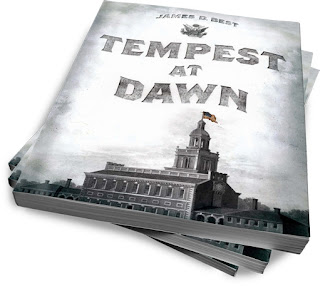
Grok's take on Tempest at Dawn


Grok's Self-Portrait

I wasn't a strong proponent of artificial intelligence until I asked Grok about my own work. Now, I'm a fan of AI. Perhaps flattery can get you everywhere.

Is Tempest at Dawn a good book?

Grok's answer:

Yes, Tempest at Dawn by James D. Best is generally considered a good book, particularly for those interested in American history or historical fiction. Here's why:

Historical Insight: The novel provides a detailed look into the events surrounding the Constitutional Convention of 1787, offering readers a narrative that feels both educational and engaging. It's praised for bringing to life the complexities of the political negotiations and personal dynamics among the Founding Fathers.
Character Portrayal: Reviews suggest that Best does an excellent job of humanizing historical figures like James Madison, George Washington, and Benjamin Franklin. This portrayal adds depth to characters often seen as one-dimensional in history books, making the narrative more relatable and engaging.
Narrative Style: While not filled with the typical elements of suspense or action like other genres, the book maintains tension through its depiction of debates and compromises. Critics and readers have noted that the story "matures" as it progresses, with the writing quality improving, which suggests an evolving narrative depth.
Educational Value: It's recommended for students or anyone looking to better understand the process behind the framing of the U.S. Constitution. The novel's depiction of the convention's debates offers a human touch to what can otherwise be dry academic material.
Critical Reception: The book has been featured on lists like the Glenn Beck Reading List, indicating its recognition in certain circles for its historical accuracy and storytelling. Reviews from sources like "What Would The Founders Think?" and Goodreads users highlight its ability to flesh out the characters and make the historical event vivid.
However, some reviewers have expressed a desire for more detail on the ratification process or the role of the Federalist Papers, suggesting that while it covers the Convention well, it might not delve as deeply into these aspects as some might hope.
In summary, "Tempest at Dawn" is well-regarded for its detailed, character-driven portrayal of a pivotal moment in American history, making it a recommended read for enthusiasts of historical fiction or those looking to gain insight into the creation of the U.S. Constitution.
The real story of our nation's founding.


Wednesday, January 24, 2024

The Killer Angels, Michael Shaara

 
The Killer Angels

A Novel of the Civil War


I last read The Killer Angels four decades ago. I liked it the first time, but really grew to appreciate it with this reading. Great story, well written, and enlightening. My project, Maelstrom, is also a historical novel that alternates between Union and Confederate viewpoints, so I appreciated the difficulty of portraying events in an entertaining manner while remaining historically accurate. 

The advantage of historical novelizations is that they can bring characters to life and allow the reader to feel like they were present when events unfolded. Novels are first and foremost stories, and stories must move. History has a way of happening in a haphazard fashion that hinders storytelling. The difficulty is to maintain good pacing while remaining faithful to the historical presentation. In this reading I could lift myself above the story and admire the craft.

Sharra does an excellent job and deserved the Pulitzer Prize he won for The Killer Angels.


Wednesday, February 8, 2023

Lincoln Book Review: Lincoln by Gore Vidal


I’m not a Gore Vidal fan. I thought Burr was a hash, especially from a historical perspective. Lincoln is a better novel, but still blemished due to Vidal’s penchant for showing off. A novel is a story, and the cardinal rule of storytelling is to never jerk the reader out of the story, but Vidal continuously interrupts his characters mid-scene to take a bow. Witty asides, overly clever dialogue, meaningless gossip, and focus on the trivial when the reader yeans for the big picture, are bad enough, but the near absence of transitions is jarring. Vidal goes from one scene to another with a whole different cast of characters without even a “by your leave.” It is like, “Hey, I veered off over here, catch up.” And you do, but it takes the rereading several sentences. By then the magic is gone.

The book is titled Lincoln, but Ol’ Abe comes across as a side character. He is explained by countless others that surround the supposed protagonist. Most of these characters come across as untrustworthy narrators. Characterization is not a Gore Vidal strong suit. Everyone seems similar and each carries a little of Vidal’s rapscallion nature. Vidal likes rogues, scoundrels, and outright villains and ascribes his characters' motivations to the dark side of human frailty.

Some historians have taken issue with the historical accuracy of Lincoln. As a historical novelist, I know strict adherence to facts presented in their proper order does not always lend itself to good storytelling. In this readers opinion, Vidal’s may skew events and people to his viewpoint but, for the most part, his violations are inconsequential. This is a well-researched book and Vidal’s relaying of events, large and miniscule, is generally accurate.

If you prefer history presented as a story, Lincoln is the best novel about Lincoln available ... until I publish Maelstrom.


Saturday, October 19, 2019

James Madison warning against democracy at the Constitutional Convention


Recently, there's been a lot of blathering about how our country should become more democratic. There is special fury aimed at the Electoral College. One conservative defense is that the Framers never intended the United States to be a pure democracy. Many times this rational is thrown up without explaining why the framers believed democracy destroyed liberty. Since James Madison has been referred to as the Father of the Constitution, I'll let him explain the dangers of  democracy. 


(As a background note, at the time of the Constitutional convention, Madison didn't technically own slaves. His father owned Montpieler and its slave labor force. This is not an excuse, but an explaintion of why he might have felt free to use slavery to illustrate his point.)


Madison made comments similar to the following on June 6th, 1787.


Excerpt from Tempest at Dawn

Madison made a few more comments on the role of the national government but then could not contain himself. Without preamble, Madison charged into new terrain. “Gentleman, all societies divide into different sects, factions, and interests. Conflicts grow between the rich and poor, debtors and creditors, landed and commercial interests, this district against that district, followers of this political leader or that political leader, disciples of this religion or that religion.

“When a majority unites by passion or common interest, the minority is in grave danger. What can restrain a majority? Not respect for others, nor conscience. In Greece and Rome, the patricians and plebeians alternately oppressed each other—with equal ferocity. We’ve seen the mere distinction of color, in our supposed enlightened time, furnish the grounds for the most oppressive dominion ever exercised by man over man.”

With this last, startled gasps escaped from various corners of the room. Madison tried to ignore the reaction. His indictment of slavery had been unpremeditated, but now that it had escaped his lips, he couldn’t recall it.

“Who imposed these unjust laws? The majority. Debtors defraud creditors. The holders of one type of property throw a heavier tax on other types of property. When a majority has the opportunity, they will always threaten the rights of the minority.” Madison shifted his gaze across the sea of delegates. “Make no mistake, in a republic, the majority always has opportunity!”


https://amzn.to/2P3geK2
The real story of our nation's founding.