Friday, July 21, 2023

Dual Book Review: Lincoln at Gettysburg and Lincoln at Cooper Union


Lincoln at Gettysburg, The Words that Remade America by Garry Wills

Lincoln at Copper Union, The Speech that Made Abraham Lincoln President by Harold Holzer


Each of these books covers a single important speech by Abraham Lincoln. The Cooper Union Address set a course for his presidential quest and the famous Gettysburg Address reset the course of the war. The speeches were delivered about three and a half years apart. The Cooper Union Address was given in New York City on February 27, 1860, prior to Lincoln’s nomination as the Republican presidential candidate. The Gettysburg Address was delivered on November 19, 1863, about four months after the battle.

Both books are highly readable and well researched. Wills’ won the Pulitzer Prize with Lincoln at Gettysburg and Holzer’s won the Lincoln Prize with his book about the Cooper Union Address.

It might seem hard to write an entire book about a single speech, but Wills and Holzer had no difficulty filling the pages. More important, readers will have no problem gobbling them up. The books are kept interesting by providing context, motivations, lifestyle, period travel, and supposed Lincoln collaboration with others in his political circle. I say supposed because Lincoln sought out advice and gave everyone the impression that he valued their suggestions and edits, however he used these changes sparingly. To a degree, this was a Lincoln technique to build support for an address prior to delivering it.

The pair of speeches have many similarities. Both were high-minded. Both had an important objective. Both advanced the abolition of slavery. Both were crafted to be heard and read. Both surprised their audiences. Both were memorable. They also had differences, the greatest being length. The Cooper Union Address was nearly an hour and at over seven thousand words, one of Lincoln’s longest speeches, while the Gettysburg address took only two minutes to deliver and contained a mere 272 words.

If you are interested in Abraham Lincoln or how to craft a great speech, these books are indispensable. They are well written, thoroughly researched, and fascinating reads.


Sunday, July 16, 2023

Book Review: The Radical and the Republican by James Oates


The Radical and the Republican

Frederick Douglass, Abraham Lincoln, and the Triumph of Antislavery Politics                                

by James Oakes

Several books study the relationship between Abraham Lincoln and Frederick Douglass. Brian Kilmeade’s The President and the Freedom Fighter was published more recently, but since I have not read Kilmeade’s treatment, I am unable to compare them. 

The Radical and the Republican is a balanced view of a pair of critically important men in American history. Since Lincoln and Douglass did not meet until nearly two and a half years into Lincoln’s first administration, the majority of the book reports their personal history and views separately, as if they were on parallel tracks toward the same goals. Except the tracks were not parallel. Although you could not prove it by Lincoln’s utterances, I believe their slavery goals were the same, but the strategy and tactics were so wide apart that Douglass doubted that Lincoln was an ally in his cause.

I think the following two quotes from the book succinctly summarize how Lincoln crafted his strategy. The first is from Lincoln and the second is an assessment of his political talent by James Oates.


“With public sentiment nothing can fail; without it nothing can succeed. Consequently, he who molds public sentiment, goes deeper than he who enacts statutes or pronounces decisions. He makes statutes and decisions possible or impossible to be executed.” Abraham Lincoln


“He was so in tune with the movement of public opinion that he could calibrate his own moves with astonishing skill.” James Oats


For those with an interest in the history of American slavery, The Radical and the Republican tells the story of how these two men overcame the huge obstacles that stood in the way of emancipation. Even when they weren't in partnership, they were partners. Partners who eventually became fast friends.


Monday, June 26, 2023

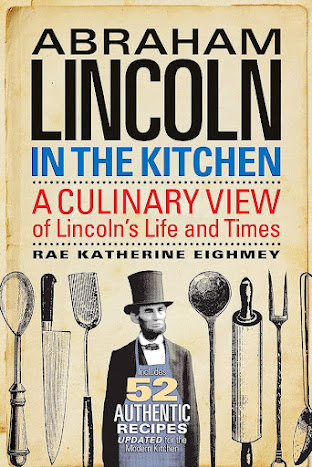
Abraham Lincoln in the Kitchen


Abraham Lincoln in the Kitchen, A Culinary View of Lincoln’s Life and Times

Rae Katherine Eighmey


The novelization of a key era must read like a story and stories include details about how the protagonists and antagonist lived. A writer can go overboard on food, lodging, transportation, clothing, etc. but a sprinkling of these details enlivens the narrative. Luckily, the description of ordinary people’s lives became an academic trend, and when I wrote Tempest at Dawn, I found countless books on the day to day life of our Revolutionary forebears. For some reason, descriptions of culture and daily routines are harder to find for the Civil War period. Actually, books about common soldiers are abundant, but I’m writing a novel about the politics of the war, not the battles.

Abraham Lincoln in the Kitchen helped fill the void. I’m not a cook, so I merely scanned the fifty-five recipes, but these are surrounded by excellent descriptions everyday life, especially food procurement, preparation, and consumption. Each chapter covers a specific historical period and Eighmey does a good job of sleuthing out how Lincoln lived and accurate period recipes.

I’m unqualified to review the recipes, but I have read enough period history to say that Eighmey did her homework, which gave me confidence to rely on her descriptions on mundane daily activities.

The subtitle, A Culinary View of Lincoln’s Life and Times, is more accurate than the main title, Abraham Lincoln in the Kitchen. Eighmey does list a couple of references of Abe helping out in the kitchen, but this did not appear to be frequent. Most historians say that Lincoln was disinterested in food and ate lightly. My greatest insight from this book is that this common wisdom is only partially true. Lincoln enjoyed being around people and he also enjoyed being the center of attention. Food is frequently prevalent when people gather, but telling stories without a mouthful hampers chowing down. In the right setting, it appears Lincoln had a healthy appetite, but when distracted by thoughts or an audience, he could neglect to fuel his body. Another insight is that Mary was much more of a homemaker than generally conveyed. Reading about their pre-presidential life made me think their marriage was stronger than I had previously assumed.


Tuesday, June 20, 2023

Abraham Lincoln: The Boy The Man


Abraham Lincoln: The Boy The Man by LLoyd Ostendorf


This book of  illustrations drawn by the author, augmented with photographs, tells the story of Lincoln's life in pictures with brief narratives. (First published in 1962.) As the author indicates in the acknowledgments, the pictorial biography is aimed at younger readers. 

When I write a historical novel, I find books aimed at younger readers invaluable. They provide three benefits. First, books for youths tell history as a story, the same as a historical novel. Second, they focus on highlights which can provide an outline for a more extensive narrative. Third, they present the popular view and mythology of historic events. This is valuable because a historical novelist must know when he or she is diverting away from common perceptions. Without proper set-up, running counter to general belief can jar the reader out of the story, and the cardinal rule for storytelling is never pull the audience out of the story.

Abraham Lincoln: The Boy The Man is an accurate portrayal of Lincoln's life. Understandably, the book presents only highlights and interesting tidbits while oversimplifying personal relationships. The smiling people in the illustrations sometimes frowned or scowled. 


Saturday, May 27, 2023

Abraham Lincoln and The Second American Revolution


Abraham Lincoln and The Second American Revolution by James M. McPherson

This book is a collection of seven essays on the Civil War. Originally, these essays were lecture notes. They are well written and thoughtful. The common theme is that the Civil War was a second revolution because it resulted in revolutionary transformations of the country and was accompanied by a counter-revolution a couple decades after Appomattox. Each essay covers a single premise and can be read separately.

Slavery divided the nation in 1787 and severed the nation in 1860. Many have said that the Civil War settled the key issue kicked down the road by the Constitutional Convention. Did the Civil War finish the Founders’ work or was it in and of itself revolutionary? Read Abraham Lincoln and The Second American Revolution and decide for yourself.

Ending slavery in the United States was horrendously difficult. It took a four year war with about 620,000 deaths. The politics were byzantine and the warfare brutal. Reunification was even more ferocious, and absent Lincoln, the backsliding undid much of the accomplishment.

In the end, I found this to be a sad book.


Monday, April 24, 2023

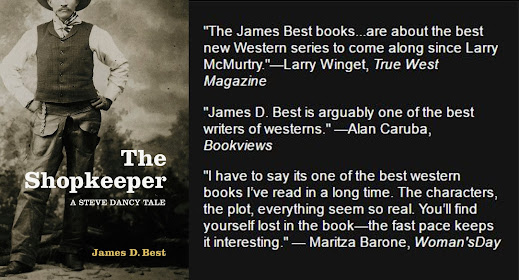
Free Kindle Edition of The Shopkeeper, A Steve Dancy Tale

Honest westerns. Full of dishonest characters.

As a promotion for the soon to be release of Old Haunts, The Shopkeeper ebook will be free from April 24th through the 28th. If you haven't started this great series, go grab yourself a copy of the first book of eight Steve Dancy Tales.


Tuesday, April 11, 2023

Lincoln Book Review: The Trent Affair


The Trent Affair: The Diplomatic Incident that Nearly Brought Great Britain into the American Civil War

The Trent Affair claims historians pay the Affair short shrift, then promises to deliver new revelations about this diplomatic incident. The books primary value is quoting first source letters, newspaper articles, and official documentation. It is always useful to read first source material, but those presented do not provide a different perspective than historians have depicted. Granted, historians gloss over the nuts and bolts of the Affair, but it’s because the issue was resolved before it could impact the course of the conflict.

What if the Trent Affair hadn’t been agreeably settled. If Great Britain had entered the war on the Confederacy’s side, it was likely that the South would have won. That would have made the Trent Affair a huge deal. Jefferson Davis’s top diplomatic priority was to drag a European power into combat. Abraham Lincoln’s top diplomatic priority was to deny the Confederate States of America recognition by European powers. This book did not provide additional insights on how Lincoln outsmarted Davis. As you study the Affair, there are hints of backroom bartering but no evidence. When desired, Lincoln was fairly astute at maneuvering without leaving fingerprints.

This is an odd little book with poor transitions and scant narrative about quoted material. The photographs of the major participants are well known. In the end, the book added little understanding to this diplomatic fiasco. A pity because handled differently, the Trent Affair could have been the linchpin to the entire conflict.


Saturday, April 1, 2023

Lincoln Book Review: The Shut Mouth Society


The Shut Mouth Society is my own Lincoln book. This modern day thriller is a typical chase novel à la Robert Ludlum. The Ludlum formula for this genre has a man and woman oddly meet to be accused of a crime and then chased by good guys and bad guys until they save themselves by unraveling a mystery that threatens social order. In my book, the mystery is a secret society formed after the Civil War that threatens to take control Mexico. The chase is launched when a small town police chief and renowned professor are asked to assess the validity of a pre-presidential document in Lincoln hand. Abe Lincoln is interwoven throughout the story as they must examine his life and motivations to solve the mystery.

I had done an enormous amount of research on Lincoln to craft an exciting story that was also historically accurate. These are book reviews but I’m too biased to rate The Shut Mouth Society as a work of fiction. (However, 405 Amazon readers have given it an average rating of 4.3 and the book was a finalist is the APA Glyph Awards for Best Novel.) This reading was to revisit my Lincoln research for my historical novel Maelstrom. I found no substantive errors. (However, if a set of dialogue begins with something like, “Some historians believe,” then what follows is not necessarily true. It only means that some credentialed authors believe it true. I believe I wrote the story in a manner where a reader will have no difficulty separating historical fact from speculation.)

All of that said, I believe The Shut Mouth Society is a fun way for readers to enjoy a rousing story and obtain a better understanding of our sixteenth president.


Thursday, March 30, 2023

Old Haunts Enters Proofreading


Interim Book Cover


Old Haunts, A Steve Dancy Tale has entered the proofreading stage. The new Steve Dancy should be available in 4-6 weeks. Thank you for your patience. Here's a snippet to whet your appetite.

“You be Steve Dancy?” asked a man behind my shoulder.

I looked up to see a lean, shallow-cheeked youth in his early twenties who appeared earnest. Earnest about what, I wondered.

“Do I know you?” I asked.

“Nope. But I heard of you. Deadly gunman. Rich as Midas. Renown throughout the West as one of the few surviving gunfighters.”

 “You forgot author. I write novels.” I laughed. “Sorry, son, those are just stories.”

“Not from what I hear. They say you write about yourself.”

I tried a friendly smile. “If only that were true. Actually, the life of a writer is exceptionally dull. Sitting in front of an Underwood all day. How’d you recognize me anyway.”

“I got my ways. I came over see if we could arrange a duel.”

“A duel? Is this a joke? I’m not a duelist. I’m a writer and a businessman. My characters duel, I don’t.”

“No joke.” He gave me a hard stare that reminded me of someone I couldn’t place. “I demand a duel.”

“Demand to your heart’s content, I’m not responding. I’m a married man with a quiet home and three kids. You’ve been misinformed.”

“Being a father ain’t no excuse. You killed my pa.” When I didn’t respond, he added, “Name of Brian Cutler.”

“Never heard of him,” I lied.

“Oh, yes you have. Without warning, you shot him and my uncle dead in the streets of Pickhandle Gulch.”

I stared in disbelief. Brian Cutler had been the first man I killed. Or the second. His brother may have been first. I didn’t remember.

Honest westerns.  Filled with dishonest characters.


Thursday, March 23, 2023

Lincoln Book Review: The Myth of the Lost Cause Vs. The Real Lincoln


This post deals with two books on the “Lost Cause.”

Thomas J. DiLorenzo presents the case for the Lost Cause in The Real Lincoln: A New Look at Abraham Lincoln, His Agenda, and an Unnecessary War, while Edward H. Bonekemper argues against the Lost Cause in The Myth of the Lost Cause: Why the South Fought the Civil War and Why the North Won.

What is the Lost Cause? The basic tenants are as follows: the War of Northern Aggression had nothing to do with slavery; the South did nothing to provoke war; the Constitution included a right to secede and the South should have been allowed to leave peacefully; antebellum life in the South was prosperous, dignified, and just; slavery was already dying; Robert E. Lee deserved deification, U. S. Grant deserved demonization, the North deserves condemnation for engaging in total war; the South had no chance of winning, and most important of all, Lincoln was a despot who started the war by invading South. 

Basically, the Lost Cause is innocence victimized.

I chose these two specific books because they are both relatively recent (2003 and 2015) and each author presents their respective positions clearly, with entertaining gusto. On which side of this controversy did I land? You can probably guess, but this argument has raged for over one hundred and fifty years and these books will provide all the information you need to make up your own mind.

(These are research books for Maelstrom, a sequel to Tempest at Dawn.)

Monday, March 20, 2023

Is Mexican drug trafficking really our fault?


The president of Mexico, Andrés Manuel López Obrador, recently claimed that the American fentanyl epidemic was caused by “a lack of hugs, of embraces.” Cute that, but nothing new. Whenever the subject of drug trafficking comes up, Mexico throws its arms wide and pleads innocent. The spokespeople for Mexico tell us the problem is in our own backyard. We consume drugs at a prodigious rate, so demand is the issue, not supply.

To listen to them explain it, we’re not only at fault for drug trafficking, but American druggies are responsible for all the drug related carnage in Mexico as well. The journalists killed this year in Mexico? Our fault. The one hundred thirty-two Mexican politicians killed in 2018? Our fault. The seventy-five American tourists murdered in Mexico in 2016? Our fault. The fourteen people killed in a thirty-six-hour period in Cancun? Our fault. The thousands of Mexican civilians killed each year by drug gangs? Our fault.

And what about the million plus deaths by overdose in America since 2000 and the million annual Emergency Room visits involving illicit drugs?

Definitely our fault.

This deflection always sounded hollow to me. These Mexican shills basically claim that we can’t complain about the drug cartels until we clean up the demand side. Except. Do they really believe that American teenagers wake up one morning and say hey, that drug thing, I'm gonna get into that? Do they really believe that the drug cartels are merely reacting to an organic demand for opioids? If we behave on our side of the border, then all will be copacetic, and the bad guys will retreat to a legitimate business? Do they really expect us to believe that line of bullshit?

They do … and we do. When pummeled with alleged culpability, Americans are too willing to blame themselves for others’ transgressions.

Here’s why I don’t buy it. The drug cartels have an expansive salesforce trained on how to seduce our kids. For the most part this sales force is American, but make no mistake, they are employees of the cartels. And there’s an army of them. A big army. They do the cartel’s bidding and they do it to a honed script. A party with drinking? Allow the partygoers to get a little drunk and then offer free samples. Hey, try this, it’s fun. Guys, you want girls? Use this. Scared of local thugs? Join our gang and survive with the benefit of getting high for cheap. Clubbing? Concerts? Sex? Go high. You’ll enjoy it more.

Once hooked, the cartel salesforce reels them in. You need more? No money? No problem. Get me a referral and I’ll give you a freebee. Still need more? You can pay by selling for me at your school … or maybe, hey, sell your body.

Now imagine a United States without this encouraged demand. Drug free? No, but a much smaller problem, with fewer gang related deaths. Gang violence is nothing more than the Mexican cartel wars exported along with their drugs into the United States.

What if we made all drugs legal? That’s how we got fentanyl, the deadliest of all the illicit drugs. With marijuana becoming increasingly legalized, the cartels had to find a new product to fill their established supply lines. Fentanyl is 35 times stronger than heroin. (And they told us legalizing Marijuana would reduce the drug problem.) Legalize fentanyl and the cartels will move something even stronger because the organizational apparatus is in place, and it requires duffle bags of cash to keep it running.

What’s the answer? We must shut down the supply line. In toto. Build The Wall and get ready for the cartels to sneak in by sea or air. Get very tough with Mexico. Force them to help us. We must stop this poison from entering the United States, and enforce domestic laws to arrest the cartel’s neighborhood sales force. Law enforcement needs to stop trying to move up the management chain and start putting the street vendors behind bars. The cartels cannot move their product without a domestic sales force, and they have a prodigious appetite for cash. Dry up their cash flow and their empires will start to crumble.

You can play with the demand side until your kid’s heart stops. It will do no good. It’s time to go after the supply.

Shut it down. Completely.