Showing posts with label George Washington. Show all posts

Monday, November 11, 2024

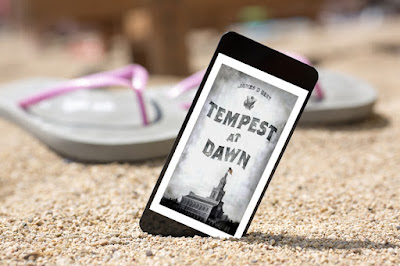
Grok's take on Tempest at Dawn


Grok's Self-Portrait

I wasn't a strong proponent of artificial intelligence until I asked Grok about my own work. Now, I'm a fan of AI. Perhaps flattery can get you everywhere.

Is Tempest at Dawn a good book?

Grok's answer:

Yes, Tempest at Dawn by James D. Best is generally considered a good book, particularly for those interested in American history or historical fiction. Here's why:

Historical Insight: The novel provides a detailed look into the events surrounding the Constitutional Convention of 1787, offering readers a narrative that feels both educational and engaging. It's praised for bringing to life the complexities of the political negotiations and personal dynamics among the Founding Fathers.
Character Portrayal: Reviews suggest that Best does an excellent job of humanizing historical figures like James Madison, George Washington, and Benjamin Franklin. This portrayal adds depth to characters often seen as one-dimensional in history books, making the narrative more relatable and engaging.
Narrative Style: While not filled with the typical elements of suspense or action like other genres, the book maintains tension through its depiction of debates and compromises. Critics and readers have noted that the story "matures" as it progresses, with the writing quality improving, which suggests an evolving narrative depth.
Educational Value: It's recommended for students or anyone looking to better understand the process behind the framing of the U.S. Constitution. The novel's depiction of the convention's debates offers a human touch to what can otherwise be dry academic material.
Critical Reception: The book has been featured on lists like the Glenn Beck Reading List, indicating its recognition in certain circles for its historical accuracy and storytelling. Reviews from sources like "What Would The Founders Think?" and Goodreads users highlight its ability to flesh out the characters and make the historical event vivid.
However, some reviewers have expressed a desire for more detail on the ratification process or the role of the Federalist Papers, suggesting that while it covers the Convention well, it might not delve as deeply into these aspects as some might hope.
In summary, "Tempest at Dawn" is well-regarded for its detailed, character-driven portrayal of a pivotal moment in American history, making it a recommended read for enthusiasts of historical fiction or those looking to gain insight into the creation of the U.S. Constitution.
The real story of our nation's founding.


Tuesday, March 10, 2020

Guest essayist at Constituting America: U.S. Constitution Sent to the States for Ratification


Constituting America


The Founding of this great nation was unique. Until 1776, with a few brief exceptions, world history was about rulers and empires. The American experiment shook the world. Not only did we break away from the biggest and most powerful empire in history, we took the musings of the brightest thinkers of the Enlightenment and implemented them. Our Founding was simultaneously an armed rebellion against tyranny, and a revolution of ideas—ideas that changed the world.
That is why we still care about America’s founding and the Framers of our Constitution.

Monday, September 16, 2019

In celebration of Constitution Day, here's a description of the signing ceremony from Tempest at Dawn


On September 17, 1787, the delegates to the Constitutional Convention signed the engrossed document that began with the three famous words that define the true source of all government power.

From Tempest at Dawn, here's an abridged description of the ceremony.


Madison sat in his customary place with folded hands resting on the table. He didn’t intend to take notes today. In fact, he didn’t intend to take any more notes on any day. This signing ceremony would be the final act of the convention.

Madison noticed that his ink-stained hands looked prayerful. He thought this fitting because a reverential spirit suffused the assembly. The chamber remained hushed as the secretary read the engrossed Constitution in its entirety. At the conclusion, Franklin rose with a speech in his hand.

“Mr. President, most men believe they possess all truth and that whoever differs from them is in error. The older I grow, the more I doubt my own judgment and the more I pay attention to the judgment of others.

“When you assemble a group of men to take advantage of their collective wisdom, you inevitably bring together all their prejudices, passions, and selfish views. From such an assembly, can one expect perfection? It astonishes me that this system approaches so near perfection.

Franklin dropped his papers to his side and spoke in a commanding voice. “I move the Constitution be signed.”

King interrupted the initiation of the signing ceremony. “I suggest that the journals of the convention be destroyed or deposited in the custody of the president. If it becomes public, those who wish to prevent the adoption of the Constitution will put it to bad use.”

 “I prefer the second expedient.” Wilson looked directly at Gerry. “Some may make false representations of our proceedings, and we’ll need evidence to contradict them.”

The last comments confirmed Madison’s suspicion that the fight for ratification would be divisive and mean-spirited.

The motion passed to deposit the journals into the hands of Washington.

Finally, all other business completed, Washington formally called on the delegates to sign the Constitution. The secretary had arranged the Syng inkstand that had been used to sign the Declaration of Independence on a green baize-covered table. Washington walked around the table and signed first. He then called the states from north to south. The delegates remained silent and reverential as they approached the low dais to apply their signatures.

When Virginia was called, Madison felt a tightening in his stomach. This Constitution would permanently bind his beloved country. When he picked up the pen, he looked at Washington, who stood respectfully to the side, instead of behind the table. The precedents set by this man would seal these words. Madison grabbed the pen, dipped it in the inkwell, and signed with confidence. When he looked up, Washington gave him a nod that made Madison think he had read his mind.


Despite his illness, Franklin had remained standing after he signed, shaking hands with delegates and whispering an occasional aside. While the last members were signing, tears glistened in Franklin’s eyes. With an obvious struggle to control his emotions, he began to speak in a stronger than normal voice.

“Gentlemen, have you observed the half sun painted on the back the president’s chair? Artists find it difficult to distinguish a rising from a setting sun. In these many months, I have been unable to tell which it was. Now, I’m happy to exclaim that it is a rising, not a setting sun.”

Once the last signature was in place, no one wanted to spend another moment in this room that had dominated their lives for so many months. Besides, John Dickinson had left a banknote for a celebratory dinner at the City Tavern.

Because of the momentous day, Franklin intended to walk out of the State House. Madison grabbed one elbow, and Wilson took the opposite side to help the old man out of the chamber. Madison hoped he could protect Franklin from being jostled by the bubbling delegates, but Washington took a point position in front of their little group, and the crowd parted like the Red Sea.

“I want to thank you gentlemen for helping an enfeebled and diminished old man,” Franklin said.

“I witnessed your diminished capacity these many months,” Madison said. He became puzzled when this somehow evoked a hearty chuckle from Franklin.

The doctor glanced between Madison and Wilson. “I’m usually assisted by the inmates of Walnut Street Prison. It occurs to me that you men have been prisoners in this chamber.” Franklin chuckled again. “With the power vested in me by the State of Pennsylvania, I pardon and set you free.”

At that precise moment, with theatrics that seemed natural to Washington, the sentries threw open the door to the State House, and Madison was assaulted by bright sunlight and a deafening roar. Hundreds of people cheered, clapped, and whistled at the sight of Gen. George Washington framed by the great white door.

The threesome stopped a respectful distance behind Washington. This crowd was not going to part so easily. In fact, the sentries had skipped down the three steps and joined arms to hold back the surge of people.

“Our rambunctious session on Saturday told our fair citizens that we had concluded our business,” Franklin observed.

“Are you riding with the general?” Madison asked.

“Relax, boys. The general will know the exact moment to step off the stoop.”

True to Franklin’s prediction, Washington gauged the crowd’s mood perfectly, and when he stepped down, they gave the men a narrow path to Washington’s beautiful new carriage.

As they followed in the general’s footsteps, the people continued to cheer and applaud. A woman leaned her head past Madison to yell, “Dr. Franklin, what is it to be? A republic or a monarchy?”

The doctor hesitated in his step and looked over the throng of anxious people. His answer came in a firm, loud voice.

“A republic—if you can keep it.”

https://amzn.to/2QekkkM
The real story of our nation's founding.

Saturday, August 31, 2019

Great Labor Day Read

https://amzn.to/2zGm1wg

The real story of our nations founding


"The best novel EVER on the U.S.Constitution."--Larry Schweikart, author A Patriot's History of the United States and over a dozen other history books

"I find hope and confidence in the wonderfully written Tempest At Dawn, by James D. Best" Allen Ball, Beaufort Observer

"The novel captures the real drama that ensued behind closed doors as they hammered out what is now the oldest living constitution and the foundation of the nation. Read it for its historical value. Read it for its dramatic value. But read it!"--Alan Caruba, Bookviews

"Thanks to James Best's masterpiece, Tempest at Dawn, I felt like the 56th delegate at the Constitutional Convention. Using vivid narrative and expressive dialogue, Tempest at Dawn presents all the major issues the Founding Fathers struggled with."--Michael E.Newton, author of Alexander Hamilton and other history books.

"This book was absolutely fabulous. When you read, it makes you feel like you are the 56th delegate. If you want a terrific historical fiction book, I recommend you start with this one." Selbrede 40Book Challenge

"The book brings our founders to life with great writing, historic accuracy and amazing wit."--On Transmigration

Friday, June 21, 2019

Why did I Write Tempest at Dawn?


I recently received a query about writing Tempest at Dawn. Here’s my answer.

The United States Constitution is one of our country’s two most revered documents. It’s one thing to write a history book about the Constitutional Convention, but a novelization could be seen as trespassing on sacred ground. When I started Tempest at Dawn, I knew the gravity of the project, but I had no idea how much work it would entail. It was twelve years between the first word and publication.

How did I get myself into this predicament? When I left corporate America to become a consultant, I found myself traveling a lot. My longest engagement was in Boston. I grew up in Southern California, where anything over fifty years old was ripped down to build something brand sparkling new. My hotel room in Boston overlooked Faneuil Hall, which had been an active meeting place since 1742. All of a sudden I was surrounded by history. I went to a bookstore looking for nonfiction about Boston, but instead bought Christopher Collier’s Decision in Philadelphia. I found the book’s description of the Constitutional Convention fascinating and ended up buying book after book on the subject. I had never known how much drama hid behind the dry narratives I had received in school. The real story was raucous, thrilling, perilous, and filled with colossal characters.

Breathtaking drama, great characters, a happy outcome, how could it go wrong. It didn’t go wrong, it went long. In the end, I believe I read every history book ever published on the convention. I wanted to treat the framers honestly, so I read at least three biographies of each of the major players. I studied Madison’s convention notes (over 230,000 words) and made sure everything I presented inside the Independence Hall was true to his notes. A good historical novel must present the period accurately, so I read dozens of books on how people lived in the late eighteenth century. Then I studied events that occurred during the convention, but were not directly associated with the proceedings. These included Washington having a carriage built, John Fitch demonstrating his steamship, horse races, Charles Peale painting a portrait of Washington, balls, and other events that I used to add variety between the deliberations.

(A special thanks to Clive Cussler, who helped with the research on Fitch's steamship demonstration in Philadelphia.)

Tempest at Dawn is tightly structured. The point of view alternates each chapter between James Madison and Roger Sherman. This allowed me to present the perspectives and biases of the two opposing forces within the convention. I had to build elaborate timelines so I could know well in advance whose point of view I would be using when something happened.

I was a stickler for accuracy. I bent rules a little to present a better story, but I wanted to know when I diverged from historical fact. This even came to the lodging. I tried to put each character in the home, inn, or boarding house where they actually stayed. Roger Sherman gave me a problem. No matter how much I looked, I couldn’t find where he stayed. I knew he wasn’t rich, so I guessed he would stay at a boarding house. Finally, I picked my wife’s maiden name and plopped him at Mrs. Marshall’s boarding house.

I made several research trips to Philadelphia. On one trip, my wife found an illustrated map of Philadelphia in 1787. It had been created for the bicentennial. It was perfect. I bought two. When we returned to our hotel, I went over the map in detail from left to right, block by block until I got to the lower right hand corner. There it showed a building with the caption, “Mrs. Marshall’s Boarding House, where Roger Sherman stayed.” I was dumbfounded … and encouraged. I took it as an omen that this book was something I was supposed to write.

Getting an agent for the book was ridiculously easy. Of course, I didn’t know that at the time. While he shopped the book, I wrote a Western. After all the constraints of Tempest at Dawn, I wanted to let my imagination fly. Unexpectedly, The Shopkeeper, A Steve Dancy Tale sold very well and became a highly successful series. On the disappointing side, Tempest at Dawn did not sell to a publishing house. So away it went in a drawer while I wrote westerns and contemporary thrillers.

Around 2009, I noticed increasing interest in the Constitution. I dug my book out of a figurative drawer (actually a file folder on my computer) and reread it. Oh, oh. First, it was way too long—well over 200,000 words. There were too many characters for a reader to remember. My penchant for accuracy caused me to use speaking patterns and language of the day. In fact, I had used direct quotes whenever possible. Except the quotes came from written records. Until email and texting, people wrote more formally than they spoke. I did a major rewrite. I modernized the language leaving only hints of the eighteenth century. I cut ruthlessly. I combined characters. Although I put the debates in a logical sequence, I didn’t alter the arguments or events inside the chamber. The book remains true to Madison’s notes.

I believe the best thing to happen for Tempest at Dawn was that by the time I did my rewrite, I had learned the craft of storytelling with my other books. (And from reading countless books on the art of novel writing.) The distance of several years also lent creative perspective. After I completed the new draft, the book reads like a novel … yet still remains truthful, even if not always precisely accurate. (There is an author note in the back that identifies the deviations from historical accuracy.)

Tempest at Dawn has been well received by professional critics and readers, and without a doubt, my favorite book. Download a sample onto your Kindle or order the paperback. I'm sure you'll be surprised and delighted by the story of our nation's founding.


Thursday, May 19, 2016

The First Presidential Campaign—George Washington, 1788-89


The following essay was first published in Constituting America.

George Washington won the first presidency under the newly established Constitution. He ran unopposed, professed not to want the job, and remained for the most part at Mount Vernon, yet won unanimously. Many believe he never campaigned, but instead acquiesced to a call to duty from his countrymen. Perhaps it was not so simple.

People think of Washington as a man of honor who won a war through strength of character and perseverance, and as a president who didn’t cling to power. From our perspective in time, he appears etched-in-marble and stiff as a board. Washington was tall, stately, reserved, and preoccupied with his reputation, but he also loved to dance, play cards, socialize over meals, and attend the theater. He was a superb horseman, ran his plantation with a sharp eye for profit, and attended church regularly. Washington was a vibrant, athletic man who wanted most of all to be loved by his countrymen.

Washington was the preeminent politician of his age and maintained good relationships with all the significant people in the country. To say he didn’t campaign for the presidency is to ignore decades of relentless politicking. (When Dwight Eisenhower was told he was not a politician, he replied that no one could become General of the Army without being a politician.) Washington bragged he never ate alone, made sure he was a central figure in all the founding events, collected a cadre of bright and capable people, and understood branding well before Madison Avenue had a clue.


Sunday, August 30, 2015

Death and Taxes

 “In this world nothing can be said to be certain, except death and taxes.” Ben Franklin


Franklin made the above quip many times, always to approving nods. Complaining about taxes is as American as apple pie, Thanksgiving, and NASCAR. After all, the Revolution started over a three pence tax on tea. Here is an excerpt from Tempest at Dawn that shows the Revolution didn't revoke Franklin's immutable law.

The owner of the Indian Queen appeared instantly. Bowing respectfully, he asked, “Gentlemen, is there anything else you desire … another ale, tea and cakes, a plate of cheese? We have excellent cognacs.”
“No, no,” Morris said. “We’re ready to retire. Thank you for your hospitality.”
The innkeeper never looked at Morris; instead he aimed a witless grin at Washington.
“My pleasure. The general’s always welcome at the Indian Queen.”
All evening, Madison had found the Innkeeper’s solicitous behavior irritating. Now he was amused by his inadvertent slight toward the rest of the party. Washington often elicited bumbling adulation.
“Thank you,” Washington said, with a regal nod of the head. “We’ll be in Philadelphia for a spell, so we’ll visit your fine establishment again.”
“Yes, the Federal Convention. A noble endeavor. My best wishes.”
“And what might those wishes be?” Washington asked.

Wednesday, July 9, 2014

Author Interview: From Inception to Current Events

I ran across this Jumping in Pools interview from 2010, and it still reflects some good points about the creation of Tempest at Dawn and its relationship to current events. Here's a snippet:
"All of my writing had been highly technical, but storytelling has always fascinated me. Although I now write fiction, I had a bumpy start. I had to read piles of books on the art of fiction, hire a writing coach, and attend numerous workshops. Then I blundered around until I started to get the hang of it. It took years for me to shed the baggage that I had brought from the technical, non-fiction world. The main thing I had to learn was how to relay history and facts without interrupting the flow of the story. Much tougher than I expected."


United States Constitution
The real story of our nations founding.

Wednesday, March 26, 2014

The Founders—A Mixed Lot

People frequently refer to the Founders as if they were a homogenous group. They did share a belief in key principles, but they were very different in other respects. For example, George Washington was a wealthy plantation owner, but his top officers in the Revolution included Major General Nathanael Greene, who entered the war as a militia private and was the son of a small farmer; Major General Henry Knox, a Boston bookstore owner who later became President Washington’s Secretary of War; and Lieutenant Colonel Alexander Hamilton, born illegitimate in the West Indies to a struggling mother who died when Hamilton was thirteen. Hamilton went on to become the first Secretary of the Treasury.