Showing posts with label washington. Show all posts

Monday, March 6, 2017

The Historical Novel Done Right


Go Book Yourself published a list of 9 books inspired by art. I would add a tenth: Lust for Life by Irving Stone. I am not a visual person, but my wife was an Art History major and docent, so I spend a lot of time in museums. When I look at a painting on my own, I usually stifle a yawn, but with her by my side, the art and artist become intriguing. It reminds me of NASCAR racing. If you know nothing about the sport, it's boring. Just a bunch of left turns at high speed in heavy traffic. But once you learn about the teams, drivers, cars, and rules, the sport becomes fascinating, as well as thrilling. Like my wife, Irving Stone had a knack for making something interesting that might otherwise be dull. Ever since reading Lust for Life, Vincent van Gogh has been my favorite artist.

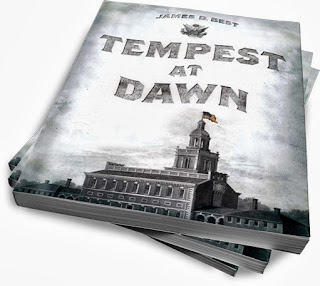
Tempest at Dawn
Irving Stone
James D. Best

Irving Stone is also one of my favorite authors. He popularized the biographical novel by turning the lives of great people into great stories. You can read his New York Times obituary here. The obituary quotes Stone as saying, ''My books are based 98 percent on documentary evidence. I spend several years trying to get inside the brain and heart of my subjects, listening to the interior monologues in their letters, and when I have to bridge the chasms between the factual evidence, I try to make an intuitive leap through the eyes and motivation of the person I'm writing about.''

The reason I feel an emotional connection to Irving Stone and Lust for Life is that this novel was the inspiration for Tempest at Dawn. I believed the Constitutional Convention was a spellbinding story. Dozens of history books had already been written, and I had read many of them, but there was a nail-biting story filled with enigmatic characters that somehow eluded these academic examinations. Like Stone, I felt the novel form would bring the story and people to life. I may not have reached the literary heights of Stone, but I enjoyed the writing immensely and most readers have been highly positive in their reviews and ratings. (565 Goodreads ratings for 3.9 stars and 208 Amazon reviews for 4.4 stars..) 

Try either book. If you enjoy history, you may find the novel a great form for gaining additional insight.


Thursday, May 19, 2016

The First Presidential Campaign—George Washington, 1788-89


The following essay was first published in Constituting America.

George Washington won the first presidency under the newly established Constitution. He ran unopposed, professed not to want the job, and remained for the most part at Mount Vernon, yet won unanimously. Many believe he never campaigned, but instead acquiesced to a call to duty from his countrymen. Perhaps it was not so simple.

People think of Washington as a man of honor who won a war through strength of character and perseverance, and as a president who didn’t cling to power. From our perspective in time, he appears etched-in-marble and stiff as a board. Washington was tall, stately, reserved, and preoccupied with his reputation, but he also loved to dance, play cards, socialize over meals, and attend the theater. He was a superb horseman, ran his plantation with a sharp eye for profit, and attended church regularly. Washington was a vibrant, athletic man who wanted most of all to be loved by his countrymen.

Washington was the preeminent politician of his age and maintained good relationships with all the significant people in the country. To say he didn’t campaign for the presidency is to ignore decades of relentless politicking. (When Dwight Eisenhower was told he was not a politician, he replied that no one could become General of the Army without being a politician.) Washington bragged he never ate alone, made sure he was a central figure in all the founding events, collected a cadre of bright and capable people, and understood branding well before Madison Avenue had a clue.


Thursday, March 6, 2014

Voting rights in the Constitution

Some accuse Constitutional Conservatives of wanting to return our country to slavery and restricted voting rights. This is deflection. Constitutional conservatives want the government to adhere to the Constitution, including amendments, so this argument is specious. Amendments have solidified American positions on these issues and these amendments are part of the supreme law of the land.

Many also harbor misunderstandings about how the main body of the Constitution addressed slavery and voting rights. Despite obvious shortcomings, by 1775, the American colonies were the most democratic places on earth. In Britain, voting rights were far more limited than in the colonies. Less than ten percent of men could vote in Britain, and those who could vote were selected by local nobility. A far larger segment of men voted in the colonies and the requirements were set by law, not officials. Voting rights traced back to the earliest history of the colonies. Within days of landing in Jamestown, for instance, the first colonists elected an executive officer. Only six men were allowed to vote in this embryonic colony, but from that moment forward, colonists expanded the right to vote to broader segments of the population.


Monday, February 10, 2014

Why did the colonists revolt?

In the five centuries following the Magna Carta (1215), Englishmen had gradually gained individual rights, so that by the late eighteenth century, the English were beginning to exercise a degree of self-government. The King and nobility still wielded substantial power, but Parliament had gained increasing authority, especially the elected House of Commons. 

Toward the end of this period, the opinions of those outside the aristocracy were increasingly influenced by the Enlightenment, an intellectual movement of the seventeen and eighteenth centuries. Enlightenment thinkers began to challenge existing religious, government, and social norms, and pushed for additional individual liberty and the free exercise of natural rights. They argued that mankind not only had a capacity for self-government, but that it was a natural right. Through an evolutionary process, Englishmen grew to enjoy an ever-increasing say over who made the laws that governed their lives. That is, those Englishmen who lived in England. If an Englishman happened to live in one of the British colonies, he was still a mere subject of the crown with no representation in Parliament.


United States history
Benjamin Franklin  before Lords in Council in Whitehall Chapel

Sunday, February 2, 2014

Can Tempest at Dawn be taken seriously?

Tempest at Dawn is a novelization of the Constitutional Convention. As a novel, it is not bound by the rigorous constraints of a nonfiction history book, but it does not deviate from the historical record except for modernizating language, re-sequencing of debates for logical presentation, and attributing a few speeches to a different delegate because that person was already established as a character. It’s confusing to tell a story with more than sixty characters, so I had to choose a representative sample and occasionally attribute to them the words or actions of others.

Historical Fiction
The real story of our nation's founding.
James Madison’s comprehensive convention notes provided a solid framework for what happened inside the locked doors of the Pennsylvania State House. The events outside the State House occurred, but literary license was used because there were very few recorded details about them. For example, Franklin’s dinner, the John Fitch Steam Boat demonstration, horse races, and George Washington having a carriage built were all outside activities during the convention.  The Fourth of July celebration happened pretty much as portrayed, and delegates did witness a two story house being moved down the street. 


Other than speeches, conversations were speculative, but based to a large degree on what must have been discussed in private meetings to shift the votes and opinions expressed in the proceedings.

Wednesday, December 11, 2013

The Founders on Excessive Government Power

The Founders distrusted overly strong governments.  That’s why they engineered a limited republic. Today, Americans seem to turn to their government to validate and protect real and presumed rights, and increasingly rely on government to guarantee the substance of life.  Many modern Americans embrace national authority and fight to enlarge governmental powers.  The Founders would be appalled.

What would the Founders think about growing government power? Here is what they said in their own words.

In our governments the real power lies in the majority of the community, and the invasion of private rights is chiefly to be apprehended, not from acts of government contrary to the sense of its constituents, but from acts in which the government is the mere instrument of the major number of the constituents. Wherever there is an interest and power to do wrong, wrong will generally be done. – James Madison

Wednesday, December 4, 2013

Commentary—Debating Jobs is Wrongheaded

“The circulation of confidence is better than the circulation of money.” James Madison

There has been endless debate and angst over the government’s failure to create jobs. This is a dangerous and highly inappropriate debate.

Goals are important. They can mean the difference between success and failure. Improper goals destroy people, organizations, or even nations. The most common error is to set goals based on effect, rather than cause. This is why the jobs debate is dangerous. The government cannot create jobs. It’s true government can hire a person, but the process only shifts money from the private sector to the public sector. Nothing was created.


The public sector has no innate growth potential. It doesn’t invent, innovate or drive productivity. This is because there is no profit motive to drive entrepreneurship. In fact, the only way to gain personal wealth in government service is through corruption.

Tuesday, November 26, 2013

Constitutional Dichotomy

“What is a Constitution? It is the form of government, delineated by the mighty hand of the people, in which certain first principles of fundamental law are established.” Constitutional delegate William Paterson, author of the New Jersey Plan

What does the Constitution mean? What is its purpose? Is it meant to be followed verbatim or is it a living document? With a few inconsequential exceptions, all Americans revere the Constitution. But people see it differently. Very differently.

Tempest at Dawn
National Constitution Center 

Perspectives on the Constitution generally fall into two classes.

Sunday, October 20, 2013

"Mike Reads" reviews Tempest at Dawn

historical fiction
The "Mike Reads" blog has reviewed Tempest at Dawn. This is not exactly a New York Times book review, but I liked it because Mike took away from the book what I intended. I love writing Westerns and like the freedom to plot my own stories, but Tempest at Dawn was a five year labor of love. It was a huge responsibility to write about the founding fathers and such an important event in American history. I read or seriously scanned over 100 history books on the Constitutional Convention, and used at least 3 biographies for each of the major characters in the story. And yes, it was a story—a great story with great characters, intense conflict, and hopeful resolution.

Tempest at Dawn continues to be well received by readers and historians. At the time of this writing, and five years after publication, the Kindle version is still ranked #28 for books about the U.S. Constitution. 140 Amazon customers have reviewed the book for 4.4 stars, and 387 readers on Goodreads have given the book an average rating of 3.9.

I'll probably never again tackle a book as challenging as Tempest at Dawn, so it's gratifying that it still sells well and continues to receive attention from readers and reviewers. Thanks.

Thursday, October 17, 2013

The Founders on a Living Constitution

The Founders believed that the Constitution was a legally binding agreement between Americans and their government. What would the Founders think about a living Constitution? Here is what they said in their own words.

“On every question of construction carry ourselves back to the time when the Constitution was adopted, recollect the spirit manifested in the debates and instead of trying what meaning may be squeezed out of the text or invented against it, conform to the probable one in which it was passed.”—Thomas Jefferson 
“The first and governing maxim in the interpretation of a statute is to discover the meaning of those who made it.”—James Wilson, in Of the Study of Law in the United States 

Sunday, October 6, 2013

A Most Audacious Letter

Governments are instituted among men, deriving their just powers from the consent of the governed. —Declaration of Independence

In February of 1787, Congress sanctioned a convention in Philadelphia “for the sole and express purpose of revising the articles of confederation, and reporting to Congress and the several legislatures, such alterations and provisions therein as shall when agreed to in Congress, and confirmed by the States, render the federal constitution, adequate to the exigencies of government and the preservation of the union.”

The instructions were clear. The convention was to recommend changes to the Articles of Confederation, and submit them to Congress and the state legislatures for approval. Instead, the Federal Convention wrote an entirely new constitution—one that would dissolve the existing Congress and take away some state power. How in the world would they get this thing approved? It threatened every political figure in the country. The answer was simple. As stated in the Declaration of Independence, the Founders believed that all political power emanated from the people. They would bypass Congress and the state legislatures, and go directly to the people for ratification of their work.

There was a problem, of course. Congress and the state legislatures to might not agree to being marginalized. The convention’s solution was to send Congress a letter. The first draft was a convoluted rationalization for their actions and a long winded declaration that their motives were pure. No one thought it was convincing, so in the end, they just told Congress what to do and how to do it.


Tempest at Dawn
Letter to Congress from Federal Convention

Friday, October 4, 2013

The United States Government vs. We the People

“That to secure these rights, Governments are instituted among Men, deriving their just powers from the consent of the governed”—Declaration of Independence
In 1776, the world was ruled by royalty. Then some upstart colonialists penned the most revolutionary document in the history of man. The Declaration of Independence flipped the world upside down. The Divine Right of Kings became the consent of the governed. The individual was now endowed by their Creator with certain unalienable Rights. This was a world-shattering concept.

Like most revolutionary visions, this one didn't just suddenly spring onto the world stage. Ironically, the philosophical basis for self-governance came from subjects of the British Crown. John Locke, David Hume, Adam Smith, and Thomas Paine were among many who maintained that this new way of life was ordained by the laws of nature and of nature's God.


The Founders were steeped in this incendiary idea. They believed that all political power emanates from the people. This concept provides the rational for the Declaration of Independence which declared it is the right of the people to institute new government, laying its foundation on such principles and organizing its powers in such form, as to them shall seem most likely to effect their safety and happiness.

Tuesday, September 17, 2013

Happy Constitution Day!


Today is the 226th anniversary of the signing of the Constitution. On May 25, 1787, George Washington officially convened what was called the Federal Convention, which we now call the Constitutional Convention. Fifty-five delegates struggled for four months to define our constitutional form of government. It was a blisteringly hot Philadelphia summer, and all the heat did not come from the weather. Several times the convention nearly collapsed, but these patriots refused to allow the American Experiment to fail.

The Framers would be proud that we continue to celebrate our Constitution, but probably say we picked the wrong date. They would prefer June 21, the date in 1788 when New Hampshire became the ninth state to ratify the Constitution, which made it the supreme law of the land. After all, the delegates did not believe they held the power to define a government. Each firmly believed this power resided with the people.

Saturday, August 24, 2013

The Constitutional Convention of 1787

"The greatest single effort of national deliberation that the world has ever seen." John Adams
It’s been called a miracle. The Federal Convention, which we now call the Constitutional Convention, was an astonishing accomplishment. It was an unusually hot summer for Philadelphia, and for a few weeks there was an infestation of big black flies that buzzed around the delegates eyes. To facilitate deliberation, the delegates voted for secret proceedings. The intent was to promote open debate and allow the delegates to change their minds, but it also meant that the windows were nailed shut and the doors remained closed. The stench of stale sweat and absence of any air circulation made the chamber extremely unpleasant.

There were several moments during the convention when it looked certain to fail. Tempers often grew hotter than the stifling room. Despite discomfort and heated emotions, the delegates refused to leave until they had secured the blessings of liberty for themselves and their posterity.  

Friday, August 23, 2013

Washington Did More Than Bang His Gavel at the Constitutional Convention

“The people may not yet be sufficiently mislead to retract from error.  Evils must be sorely felt before they can be removed.” George Washington
It’s hard to believe that George Washington could be underrated. After all, he’s eulogized in marble, stone, and oil; Amazon lists nearly two thousand biographies; and he’s called the Father of Our Country. And yet …

The popular perception of Washington is of a man of honor that won a war through strength of character and perseverance, and a first president who gracefully stepped down from power after two terms. Most view him as cold and aloof. Many dismiss him as an aristocrat who owned slaves and relied on others for creative thinking and grand ideas. Historians generally concede his military contributions, and restrained leadership as president, but dismiss him as a mere figurehead at the Constitutional Convention. They invariably mention that during four arduous months of debate, he spoke only once.

Washington was very different from our image of the man. It’s true that he was tall and stately, personally reserved, preoccupied with his reputation, and ambitious, but he also loved to dance, play cards, and attend the theater. He was a superb horseman who enjoyed wagering on races, ran his plantation with a sharp sense for profit, attended church religiously, was a master politician, and bragged that he hadn’t eaten dinner alone since before the war. Whatever he became involved in, he actively managed, and he was an expert in public relations and image making. Washington was a vibrant, athletic man who wanted more than anything else to be loved by his countrymen. He was open and vociferous about his political beliefs, but closed and silent about his political manipulations.